Vichy, the springs and the long walk by the Allier
A morning among the springs, a midday with the town’s layered history, and an afternoon in parks that follow the Allier.
- Kind of place
- drinking springs
- House rule
- the galleries keep you dry
- Country
- France
Vichy
What does a spa town do with a river, a drinking hall and a name that carries more than one history? In Vichy, the answer is spread along the Allier: springs at the centre, parks beside the water, and a past that refuses to stay in one neat category.
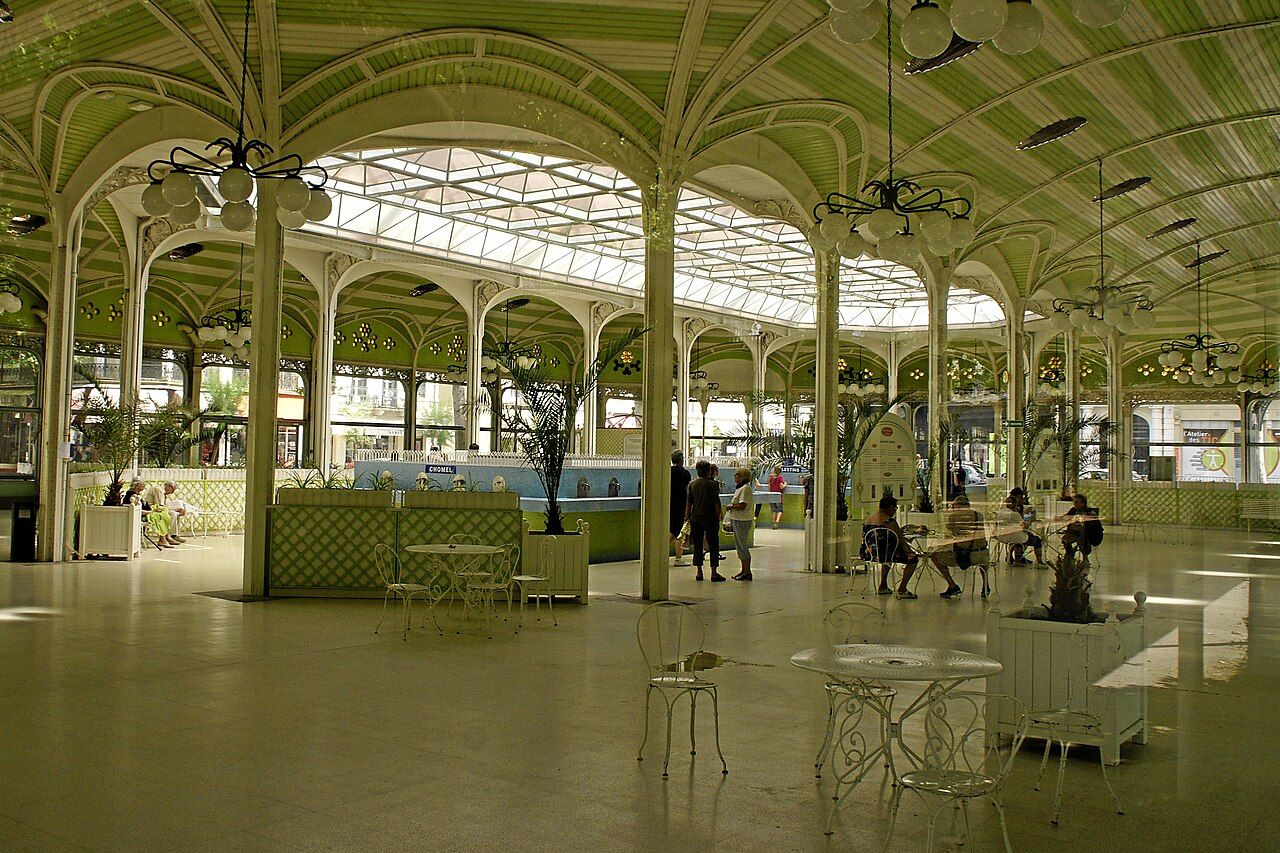
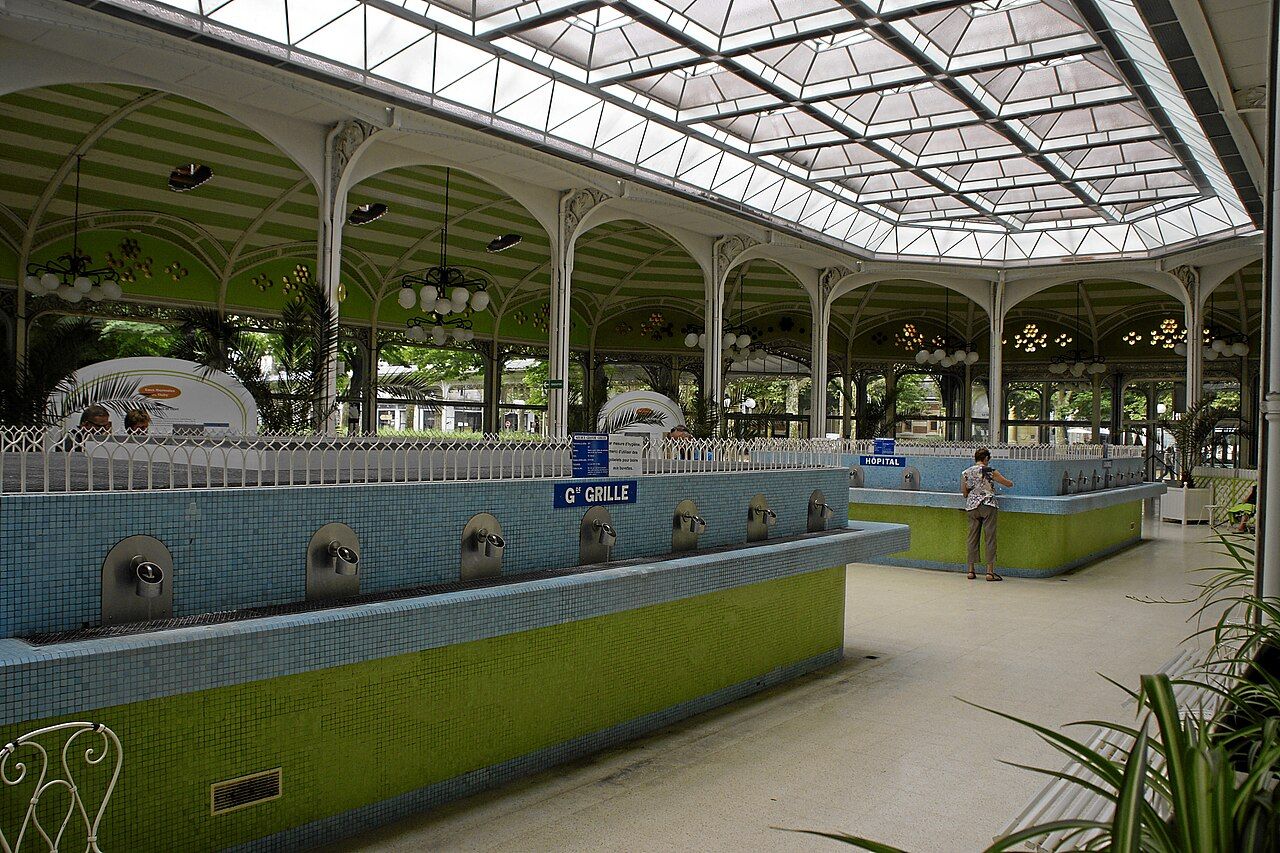
Morning: where does a visit begin? At the Hall des Sources, a glass and iron hall where visitors can drink from the town’s springs. The arrangement is pleasingly direct. There is the hall, there are the springs, and there is the small matter of deciding to drink from them. No elaborate preamble is required.
From there, what if it rains? The Parc des Sources is lined with covered galleries, so visitors can walk while keeping dry. A roof over a walk is not a grand idea, but it is a sound one. The galleries make the weather less of a committee member in the day’s plans.
Why does Vichy look as though parks belong to its basic design? Napoleon III visited several times in the 1860s, and the town was rebuilt with parks and boulevards during his visits. The Hall des Sources and the Parc des Sources make a natural morning pair: one gives the springs a place, the other gives the walk a way through rain.
Midday: what else is there besides springs? The Vichy Opera house dates to the early 20th century and has an Art Nouveau interior. It is a useful reminder that the town’s story is not only about drinking water and taking the air. Small white mint pastilles made with salts from the springs have also been sold in Vichy since the 19th century. A town can make a small edible emblem of itself. Vichy has done so, with mint and a certain economy of scale.
And what does the name mean? Vichy is short on the page, but it carries a complicated history. The town was the seat of the French collaborationist government from 1940 to 1944. That fact sits beside the spa-town story; it does not dissolve into it. Vichy is also one of the Great Spa Towns of Europe, listed by UNESCO in 2021. The name holds both, without making either easier to read.
For another spa-town story, there is the Tuscan spa town with its own funicular. It is a different point of comparison, not a footnote that tidies Vichy up.
Late afternoon: where does the town open out? Along the Allier. Parks laid out in the 19th century cover a long stretch of the riverbank, so the walk can keep following the water rather than turning back at the first convenient patch of green. The river gives the afternoon a quiet direction. The parks do the patient work of making room beside it.
Is there a single, simple version of Vichy to take away? Not quite. There are springs, covered galleries, parks and boulevards, alongside a history that asks to be held in view rather than smoothed over. For a wider thread on moving between spa towns, read about reaching the spa towns without a car.
Close by in spirit: Baden-Baden on foot, from the Oos to the hills
Vichy’s best idea may be the long, unhurried stretch of park beside the Allier.
The numbers: 1860s; 19th century; early 20th century; 1940 to 1944; 2021.