Kusatsu and the field of hot water
A day in Kusatsu follows steaming water from wooden troughs to bath pipes, with paddles, a work song and the evening-lit yubatake along the way.
- Kind of place
- hot spring town
- House rule
- the water is very hot and acidic
- Country
- Japan
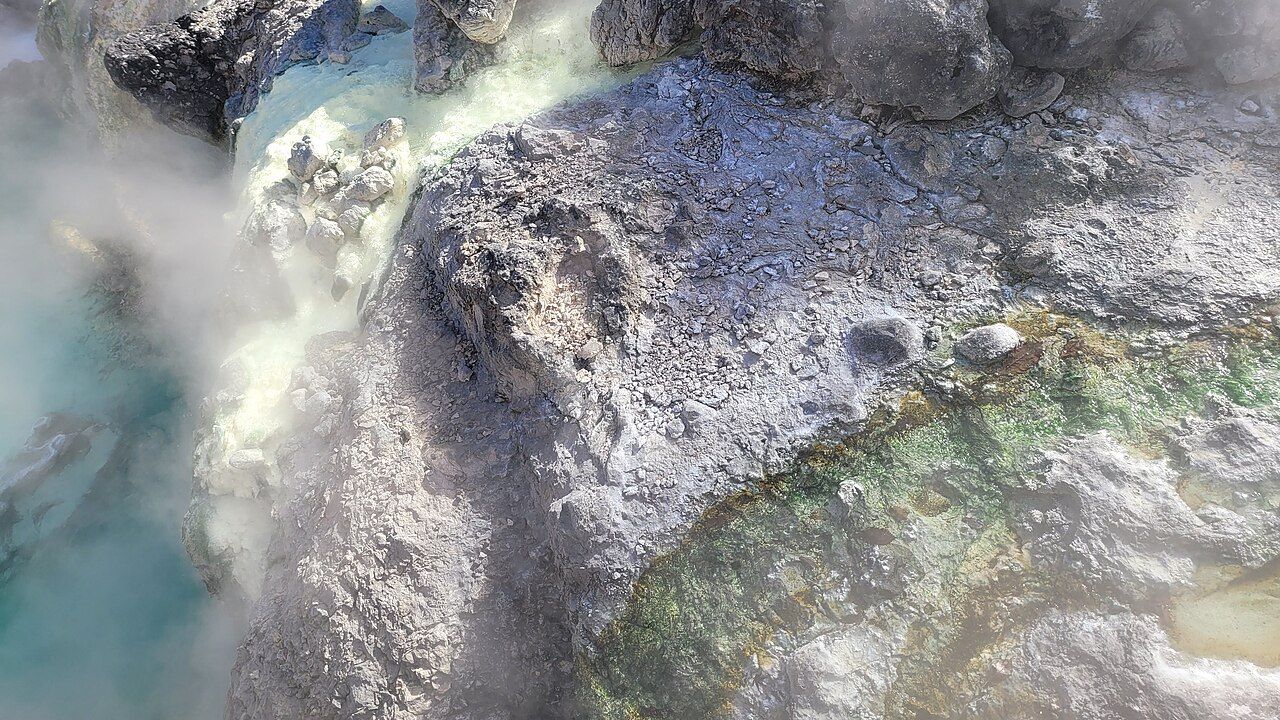
Kusatsu
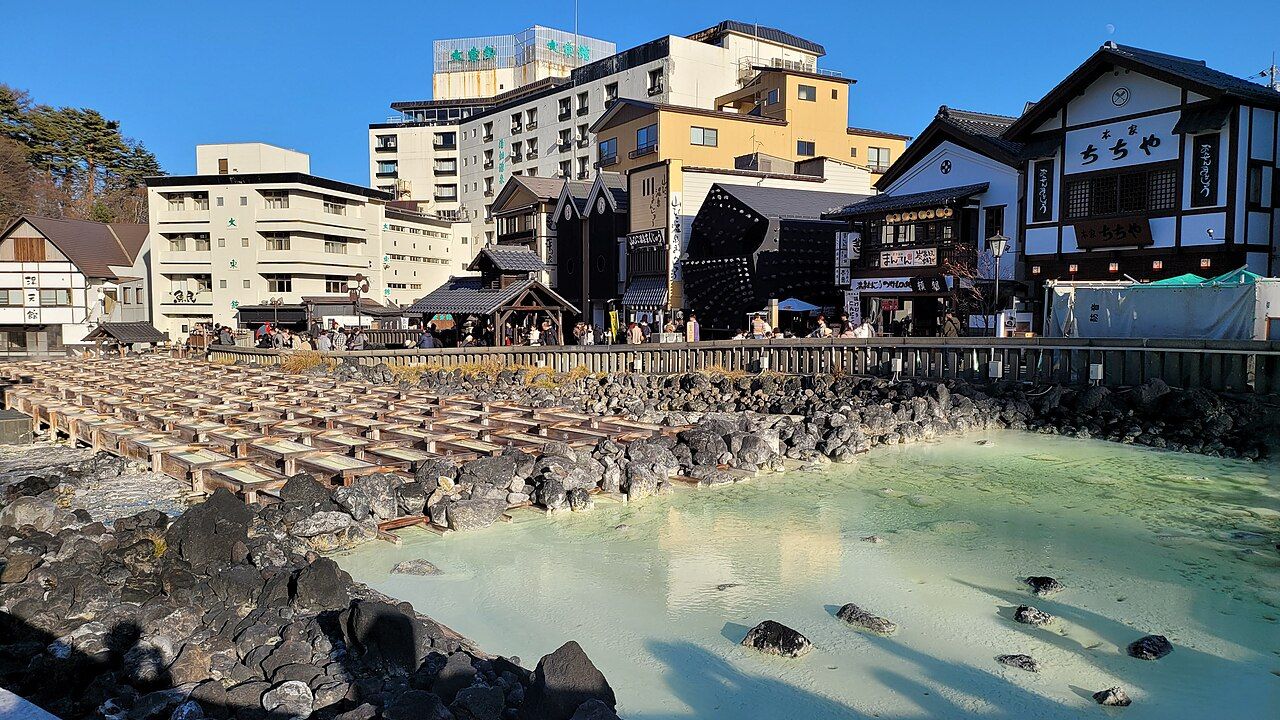
The small story Kusatsu tells in the middle of town is not about a bath, at first. It is about water going somewhere. At the yubatake, steam rises from a channel of hot spring water, and wooden troughs carry it along before it reaches the baths. The place name means “hot water field”. It is a practical arrangement with an unusually visible plot.
Morning: what is the yubatake? It is the channel at the centre of Kusatsu, an onsen town in Gunma Prefecture, at about 1,200 metres above sea level. Hot water runs through the wooden troughs to cool before it is piped to the baths. Rather than disappearing behind walls, the water gets a route through town. Follow it for a while and the plumbing becomes the outing.
How much water are we talking about? Kusatsu has one of Japan’s largest natural flows of hot spring water: more than 30,000 litres a minute. The water is strongly acidic and very hot. The troughs are not decorative scenery tacked onto the process; they are part of how the water is cooled on its way to the baths. That is a solid answer to the question of why the yubatake sits so prominently in the middle of town.
Midday: what is yumomi? It is the local custom of stirring the hot water with long wooden paddles to cool it, often to a work song. Yumomi shows for visitors are held in a hall next to the yubatake. There is something appealingly direct about the method: paddles, water, a song, and a job that cannot be hurried by looking at it impatiently.
Does the custom explain how to behave at a bath? Not by itself. It does, though, make a useful companion to the order of things in a Japanese bath. Kusatsu’s water has its own particular character, while the paddles make cooling a public, visible act rather than a detail to be guessed at. The show belongs beside the yubatake, where the water is already the main event.
Late afternoon: where next? Sainokawara Park is a short walk from the yubatake. Hot streams run between rocks there, so the walk extends the same theme without requiring much interpretation: hot water, outdoors, still doing what hot water does. If a different landscape is on the mind, there is also a volcanic crater in Hokkaido. That is a separate story, and Kusatsu has plenty to say for itself.
Evening: does the yubatake change after dark? It is lit up in the evenings. The channel that was already easy to follow by day becomes a focal point again, with the water and its steam still at the centre of things. A grand reveal would be too much to ask of it. It is the same working channel, simply given its evening turn.
What should the day be organized around? The water, rather than a checklist. Start with its route through the troughs, leave room for the yumomi show, then walk to Sainokawara Park and return to the lit-up yubatake. For a related stop in the Japanese hot-spring world:
Close by in spirit: Hakone, steam and a lake under Fuji
The numbers: about 1,200 metres; more than 30,000 litres a minute. I’d keep coming back to the yubatake.