Karlovy Vary and the colonnades
A day’s rhythm takes shape between mineral springs, porcelain cups and long colonnades in a West Bohemian town where the walk is part of the ritual.
- Kind of place
- drinking springs
- House rule
- sip, do not gulp
- Country
- Czechia
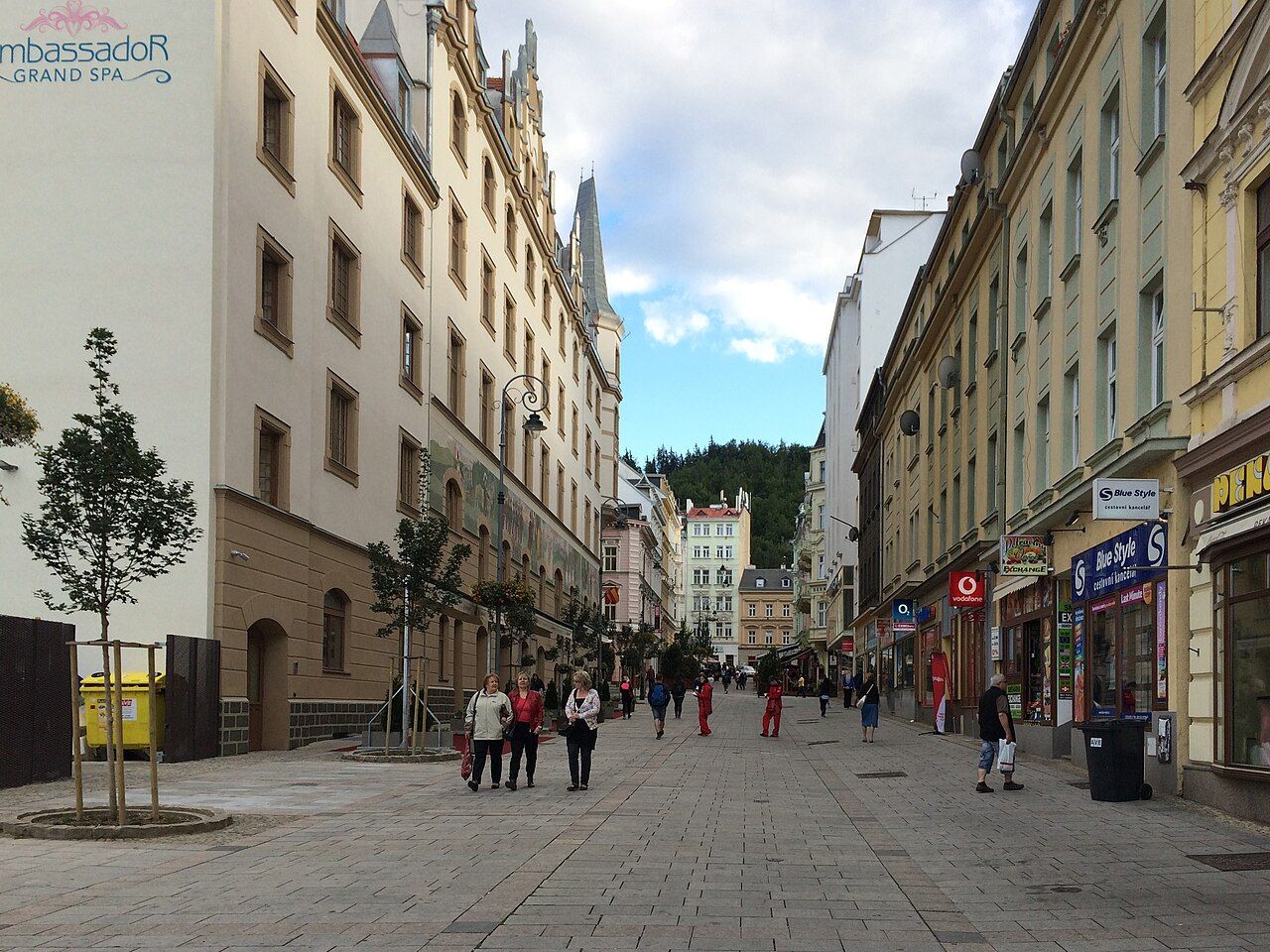
Karlovy Vary
What does a spa town ask of the morning? In Karlovy Vary, it asks for a walk, a small porcelain cup and the willingness to sip rather than gulp. People move from spring to spring in the town centre, drinking water from spouted cups and making the distance between one spring and the next part of the ritual. The day has a useful shape: walk, drink, pause, then walk again.
How did this particular town begin? Tradition holds that Emperor Charles IV founded Karlovy Vary in the 14th century, and that the town took its name from him. The story is grand; the daily practice is pleasantly plain. There are about a dozen mineral springs in the centre, each with a different temperature. The visitor’s task is not to conquer them. It is to keep moving at a strolling pace.
What belongs in the hand? A flat porcelain cup, with a spout built into its handle. It is an object shaped around the local habit, rather than around the usual idea of a cup. The water tastes of salt and iron. That is not a description designed to flatter the first sip, but the taste is part of the point: this is a drink to approach with attention, not one to gulp down while thinking about something else.
Why does the morning suit the colonnades? They give the walk a clear sequence without making it feel like a march. The Teplá River runs through the centre between rows of 19th-century spa houses, while the springs offer a reason to stop. The route can stay a stroll rather than a test of stamina. A little walking, a little drinking, and a pause under a roof are already the day’s main business.
Close by in spirit: The Great Spa Towns of Europe, one list of eleven
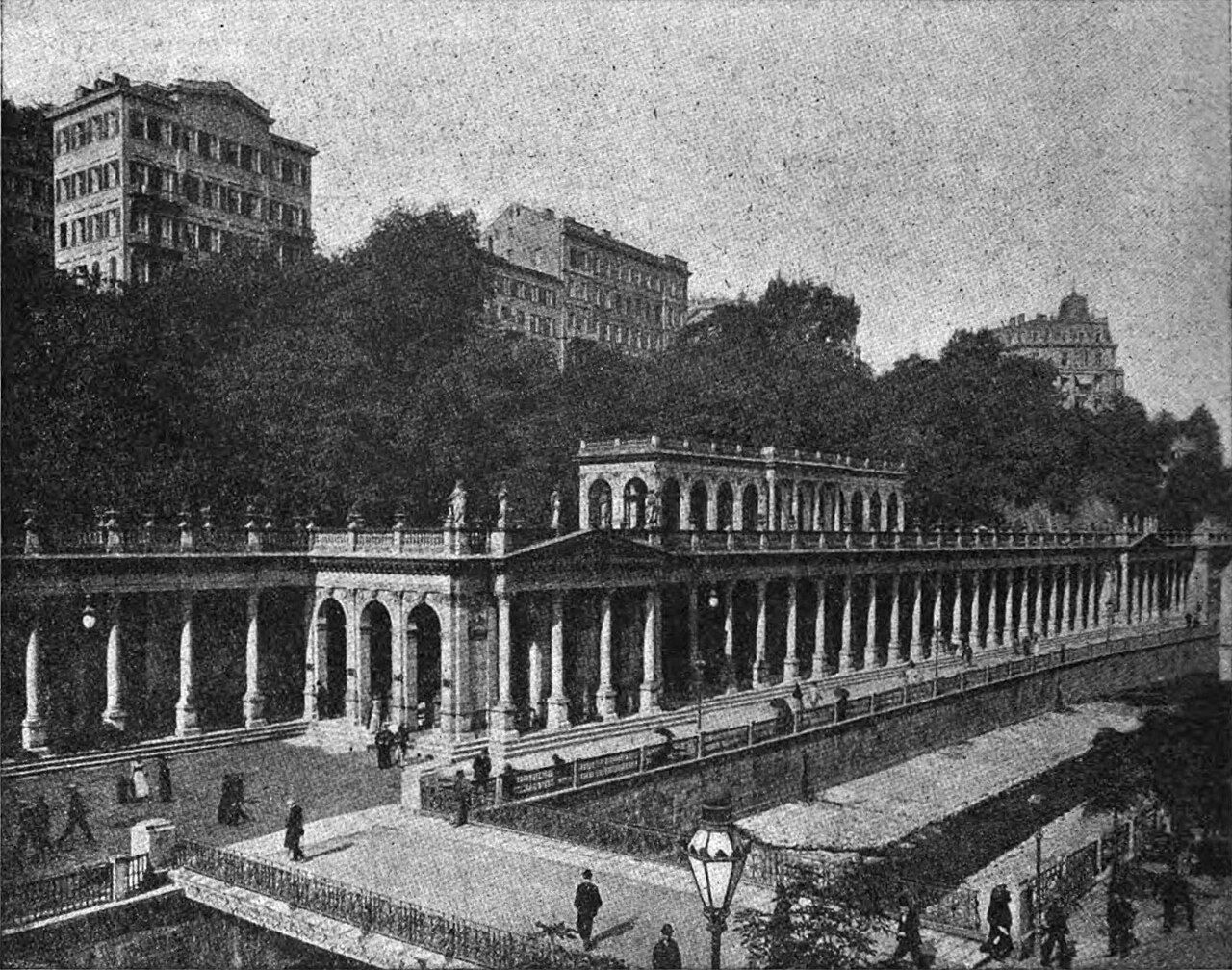
What is the first colonnade worth lingering under? The Mill Colonnade is a strong answer. Designed by Josef Zítek and built between 1871 and 1881, it has 124 Corinthian columns. The effect is formal, and the repeated columns give the walk its own steady rhythm. My preference is for a place that makes standing still feel like a reasonable use of the morning.
Does every spring taste the same? No. The springs taste of salt and iron, and each comes out at a different temperature. The spouted cup makes the local instruction easy to follow: sip, do not gulp. A stroll from one spring to another is also a way of noticing those differences, rather than treating the whole town as a single glass of mineral water.
What happens at midday? The walk carries on, but the Vřídlo makes a striking place to stop. It is the town’s strongest spring, inside a glass-walled colonnade, and its water shoots up to about 12 metres. The water comes out of the ground at about 73 degrees Celsius. That is a lot to take in, even before considering the cup. The ritual is less about finishing a drink than about making room for the next spring.
The ritual is less about finishing a drink than about making room for the next spring.
Is the Vřídlo a spring to treat casually? It is better understood as a spectacle as well as a drinking spring: a jet of water rising inside glass, with the heat stated plainly in the facts of the place. The cup remains useful, but nobody needs to pretend that the strongest spring is an ordinary refreshment stop. The water’s temperature is part of the encounter, and the glass walls make the upward rush visible.
What makes a good pause between springs? A thin round spa wafer, a local speciality sold along the colonnades. It offers a change of texture from the water and gives the walk a small edible landmark. There is a particular pleasure in a routine with room for both the spring and the wafer; the town has not insisted that every stop be solemn.
How should late afternoon feel? Less like a final checklist than another stretch beside the Teplá River, between the spa houses and colonnades. The point is not to drink from every spring simply because they are there. About a dozen is enough to make the choice interesting; the walk can stay unhurried even when the cup is empty and the next spring is close by.
What if the colonnades lead to thoughts of other spa towns? Karlovy Vary belongs to a wider West Bohemian mood of walking and taking the waters. There is the greener spa town to the southwest, the slow train across West Bohemia, and little Františkovy Lázně nearby. Each thought can wait; the present walk has springs enough to occupy it.
Does the town have another annual rhythm? Karlovy Vary hosts an international film festival every summer, first held in 1946. That is a different reason for the town to gather, but the springs remain the daily ritual at the heart of this walk. The town's tourist pages list the drinking springs and their temperatures, a useful way to see how varied the stops are before setting out.
Where does the morning-to-afternoon itinerary end? Not with a grand finish. It ends when the cup has been used, the river has kept you company for a while, and the colonnades have become familiar enough to recognize on the way back. The best part is that the walk never needs to pretend to be anything more complicated than a walk.
The Mill Colonnade is my favourite place to let the walk take its time.