Shikoku’s 88 temples, and what a henro carries
A walk around Shikoku measured in temples and kilometres, marked by a staff, a book of stamps and calligraphy, and gifts offered along the way.
- Kind of place
- pilgrimage
- House rule
- accept osettai with thanks
- Country
- Japan
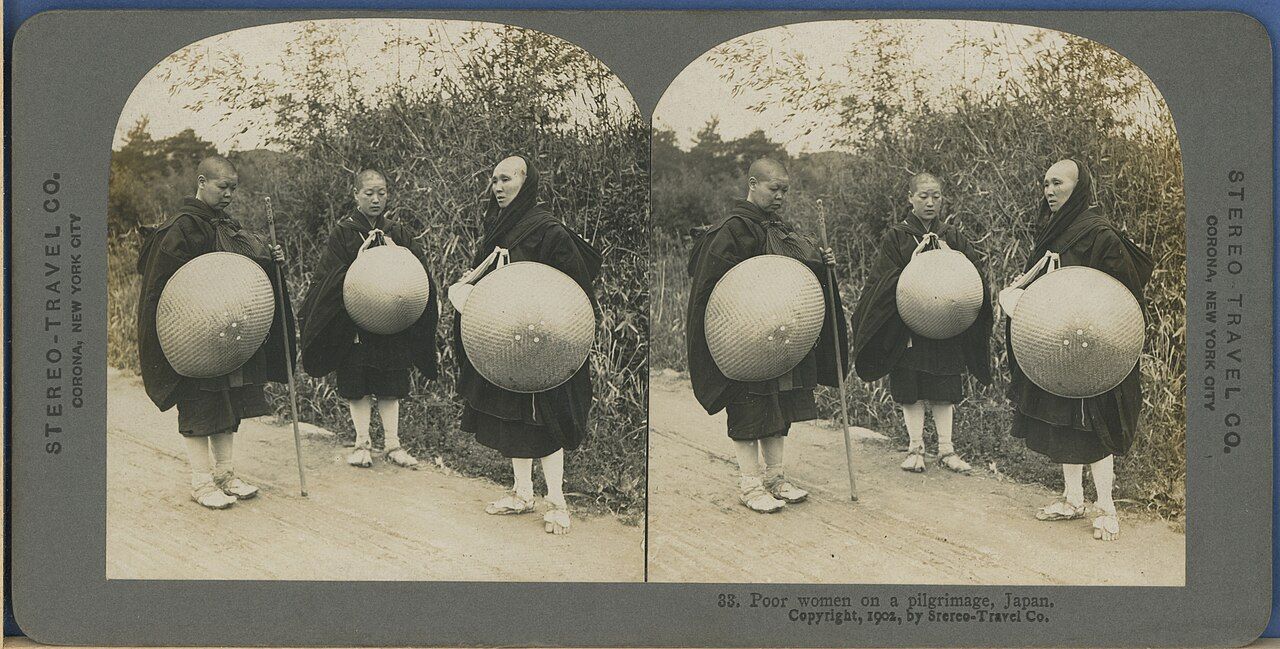
A henro is offered food, drink or a small gift. There is no elaborate response to learn: local people give osettai to pilgrims, and the pilgrim accepts with thanks. On a walk this long, a simple custom has a certain appeal.
What is the circuit? It is a pilgrimage of 88 Buddhist temples around the island of Shikoku. The route makes a circuit, which is a neat idea until the walking begins to accumulate. On foot, the whole Shikoku circuit is about 1,200 kilometres long. The number of temples is fixed; the kilometres are still a lot of walking.
How long does it take? Walking the full pilgrimage usually takes between 30 and 60 days. That is a long stretch of days to carry the same staff and keep the same direction in mind. The scale is part of the practice: this is not a quick tour of temple doors, but a circuit walked from one temple to the next.
What does a henro wear? Many henro wear a white vest and a sedge hat, and carry a wooden staff. The outfit is recognizable without needing much explanation. A hat, a vest and a staff: there is a pleasing lack of unnecessary luggage in the outline, though the walk itself is quite enough to occupy the day.
What is the staff for? It stands for Kūkai, who is said to walk with every pilgrim. That gives the wooden staff more to do than keep company with a hand. It carries a presence into the walk, or at least the idea of one; both are useful things to have along a long circuit.
What is osettai? It is the custom of local people giving food, drink or small gifts to pilgrims. The fact that a gift is offered does not turn it into a transaction. Accepting it with thanks is the custom, and perhaps the clearest lesson in what a henro is asked to carry besides the visible things: an ability to receive a kindness without making a production of it.
What goes in the book? At each temple, pilgrims collect a stamp and calligraphy in a book called a nōkyōchō. It gives the circuit a record that is made one temple at a time. A stamp and a piece of calligraphy are modest things to bring away from a visit; collected through the whole walk, they make a satisfying account of having kept going.
Where does the walk end? Many pilgrims visit Mount Kōya after finishing the Shikoku circuit. The route may be complete, but a pilgrimage does not have to end at the last temple on the island. For that next part of the story, there is the mountain where many henro finish. And, for a rather different detail along the way, see the old bathhouse near temple 51.
Does Shikoku’s circuit sound like a lot to hold in mind? It is 88 temples, a staff standing for Kūkai, and a custom that makes room for a gift. For another walking pilgrimage, continue with the trails to the Kumano shrines.
Close by in spirit: St Olav’s Way to Trondheim, one long question at a time
The numbers: 88 temples; about 1,200 kilometres; usually 30 to 60 days on foot.