Rishikesh, yoga by the Ganges
A day in Rishikesh follows yoga’s reputation, the rules around meat and alcohol, and a cold, fast river that keeps its own counsel.
- Kind of place
- yoga
- House rule
- no meat, no alcohol in town
- Country
- India
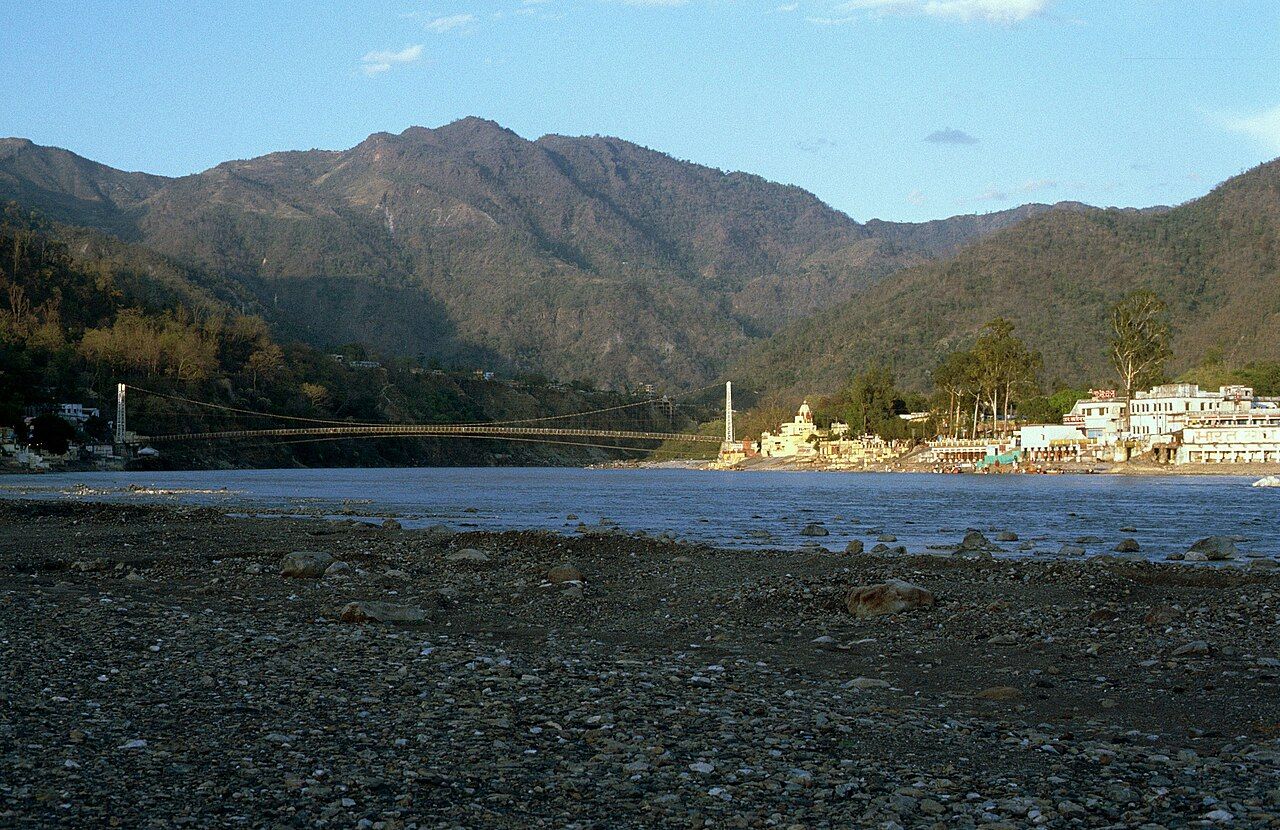
Rishikesh
What does a day in Rishikesh ask of a visitor? Mostly, it asks for a little attention. The town lies in Uttarakhand, where the Ganges leaves the Himalayan foothills for the plains. Its reputation travels farther: Rishikesh is often called the yoga capital of the world. That name can make a place sound like a single, tidy idea. Rishikesh is less tidy than that. Yoga is part of its rhythm; so are the river, the ghats and the rules that shape ordinary choices.
What belongs in the morning? Start with the river as a fact, not a backdrop. The Ganges here runs cold and fast. That description is not poetic licence, and the water does not become less itself because yoga has a famous address nearby. A morning can be spent getting the shape of the town: river, bridges, ghats, and the routes between them. No grand itinerary is needed. The river has already supplied the main event, and it is not especially interested in being scheduled.
Is yoga the whole story? No. It is a reason Rishikesh is known around the world, and the International Yoga Festival is held here every March. That gives the practice a visible place in the town’s identity without requiring every visitor to arrive with a mat, a theory or a new version of themselves. There is room to be curious without making a claim for what a practice can do. Sometimes a name is just a name, even when it has become a very large one.
What are the town’s rules? The sale of meat and alcohol is banned in much of Rishikesh. That is worth knowing because a town’s character is not only its river view; it is also the decisions that shape what is available. The rule belongs to the place, not to a promise about anyone’s body or state of mind. For the slower question of what a retreat without conversation might involve, there is a week or ten days without talking. A quiet plan still has its own logistics, which is perhaps the least quiet thing about it.
Where does the river meet the day-to-day town? At the ghats. Triveni Ghat is one of the main bathing ghats of Rishikesh, a place where the river is not an abstraction or a view framed for someone passing through. The word bathing may sound gentle. The Ganges here is cold and fast, and drownings happen every year. That fact needs no decoration or dramatic flourish. Water can be beautiful and dangerous in the same breath.
What should midday be for? Perhaps for letting the town remain a town instead of trying to make every hour into a lesson. Ram Jhula and Lakshman Jhula are suspension bridges across the Ganges. Lakshman Jhula was closed to traffic in 2019 after it was found to be unsafe. These names are useful bearings, but the river underneath them is the stronger point of reference. There is something faintly reassuring about a place that resists being reduced to its spiritual reputation. Even a famous yoga town has bridges to think about.
Close by in spirit: Temple meditation around Chiang Mai
How does a visitor choose a retreat without turning discernment into a second job? Slowly, and with a willingness to ask plain questions. Here is telling a sound course from a poor one. Rishikesh’s reputation may bring a great many expectations along with it; expectations are enthusiastic travellers, and not always careful packers. The town itself offers enough to consider without a visitor needing to arrive with a complete theory of yoga. A little curiosity is useful. A grand declaration can wait.
What belongs in the late afternoon? The bridges and ghats still make sense as the day’s landmarks, while the river remains the part that refuses to behave like scenery. The Beatles stayed at an ashram in Rishikesh in 1968. Its ruins, known as the Beatles Ashram, were opened to visitors in 2015. That history gives another layer to the town’s reputation: people have come here with ideas about what they might find. Ruins are not an answer to those ideas, but they do make the past feel less abstract.
How should the river be understood by late afternoon? Not as a promise. The river is not scenery with a soundtrack; it is cold, fast water, and drownings happen here every year.
The river is not scenery with a soundtrack; it is cold, fast water, and drownings happen here every year.
Why stay for dusk? The Ganga aarti is an evening ceremony of lamps and chanting, held on Rishikesh’s ghats at dusk. Here, the day gathers around a public ritual: lamps, voices, river. It is a different register from the quiet attention often associated with yoga, without requiring a decision about which one is more profound. The ceremony is what it is. The river keeps moving through it, cold and fast, with no interest in an audience’s preferred interpretation.
Is there a neat conclusion to a day here? Not quite. Rishikesh holds several things at once: a worldwide yoga reputation, rules on the sale of meat and alcohol in much of town, old bridges, ruins and a river that deserves more than a passing glance. Uttarakhand Tourism has pages on Rishikesh and its ghats. For another story shaped by a different kind of quiet, there is the place of the Buddha's awakening.
The numbers: the International Yoga Festival is held every March; the Beatles stayed in 1968; the ruins opened in 2015; Lakshman Jhula closed to traffic in 2019. Rishikesh is a strong reminder that a river can be the view and the warning.