A night in a temple on Mount Kōya
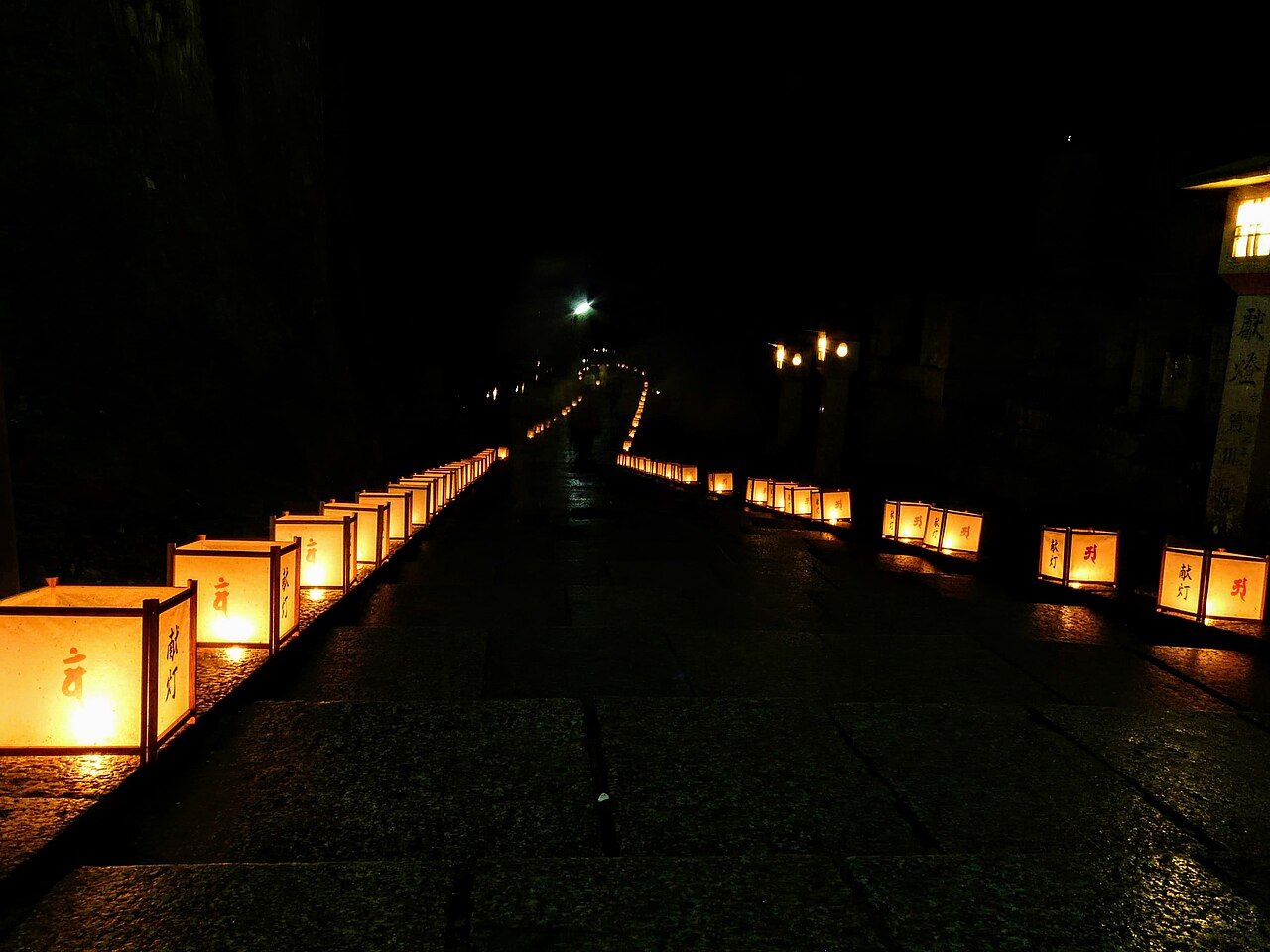
On Mount Kōya, a temple stay brings shōjin ryōri, the possibility of morning service and a walk through Okunoin’s lantern-lit cemetery.
- Kind of place
- temple stay
- House rule
- join the morning service quietly
- Country
- Japan
Mount Kōya
Why spend a night on Mount Kōya? The plateau, in Wakayama Prefecture, is the centre of Shingon Buddhism, and the monk Kūkai founded its monastery in 816. He became known after his death as Kōbō Daishi. That history is a large frame for a small decision: stay overnight, rather than treating the mountain as a place to pass through. More than 100 temples stand here, and about 50 offer lodging called shukubo. The visitor’s part is not complicated. Stay, eat what is served, and make room for the morning.
What is a shukubo? It is overnight lodging offered by a temple. Not every temple offers it, which makes the figure of about 50 useful context rather than a promise that every door is open to guests. The appeal is the shape of the stay: the evening and morning belong to the same place, rather than being bookends around a hurried visit. A temple stay is less a performance than a chance to be present for its ordinary shape. The experience can remain modest. Mount Kōya already has enough history without help from an overactive imagination.
What is served in the evening? Guests at temple lodgings are served shōjin ryōri, Buddhist vegetarian cooking. The facts are refreshingly straightforward: it is vegetarian, and it is part of the temple stay. Dinner need not become a test of spiritual seriousness, or a menu invented for the occasion. The meal can simply be dinner, taken within a place shaped by Buddhist practice. A quiet meal is a reasonable counterweight to the impulse to turn every journey into a series of highlights. For another kind of pilgrimage, there are the old shrine trails a valley away.
What happens in the morning? Guests at many temple lodgings may join the monks’ morning service. “Many” matters: joining is possible at many lodgings, not something to assume everywhere. The stated custom is to join quietly, which is a sound plan for anyone entering a service that is not theirs to conduct. A catalogue of questions, or a wish to understand every detail at once, is not required. The plain task is to be present and quiet. Morning has a way of making even a modest instruction feel like useful company.
What gives Okunoin its weight? It is a cemetery on Mount Kōya, with more than 200,000 graves and memorials beneath tall cedars. The path runs for about two kilometres to the mausoleum of Kūkai. Those numbers are not decorative; they change the scale of the walk in the mind. A cemetery of this size does not ask for a brisk tally, and a path ending at a mausoleum is not merely a route from one point to another. Kūkai is believed by his followers to remain in eternal meditation at Okunoin. The belief is part of the place’s meaning, not a claim that needs dressing up.
Why visit in the evening? The angle of this stay is the movement from dinner into the early morning, with Okunoin’s lantern-lit cemetery giving the night its particular focus. The facts offer no schedule for the walk, and none is needed to see why it belongs here: the cemetery, the cedars and the path to Kūkai’s mausoleum are already enough to hold attention. There is a certain relief in a place that does not need another attraction added to it. If warm water is part of the wider pilgrimage picture, see a hot spring that pilgrims still use.
What should a visitor expect the mountain to be? Mount Kōya lies on a plateau at about 800 metres, and the monastery was founded here by Kūkai in 816. It is also part of the World Heritage site of the Sacred Sites and Pilgrimage Routes in the Kii Mountain Range, inscribed in 2004. These are useful bearings, not a script for what the stay must feel like. A temple, a vegetarian meal, a quiet service and a cemetery path are enough particulars for a night. For a different kind of stillness, there are gardens meant for sitting and looking.
Does a night here need a grand conclusion? Not really. The morning service is available to guests at many temple lodgings, and the cemetery path leads to the mausoleum of the monk who founded the monastery. That is a clear enough beginning and ending for a stay. Mount Kōya is not only a setting for reflection; it is a mountain town with temples that take in overnight guests. The distinction is worth keeping. It lets the place remain a lived religious centre, rather than a backdrop arranged for a visitor’s private revelation.
A night on Mount Kōya seems best when it leaves room for the service, the meal and the walk to speak for themselves.
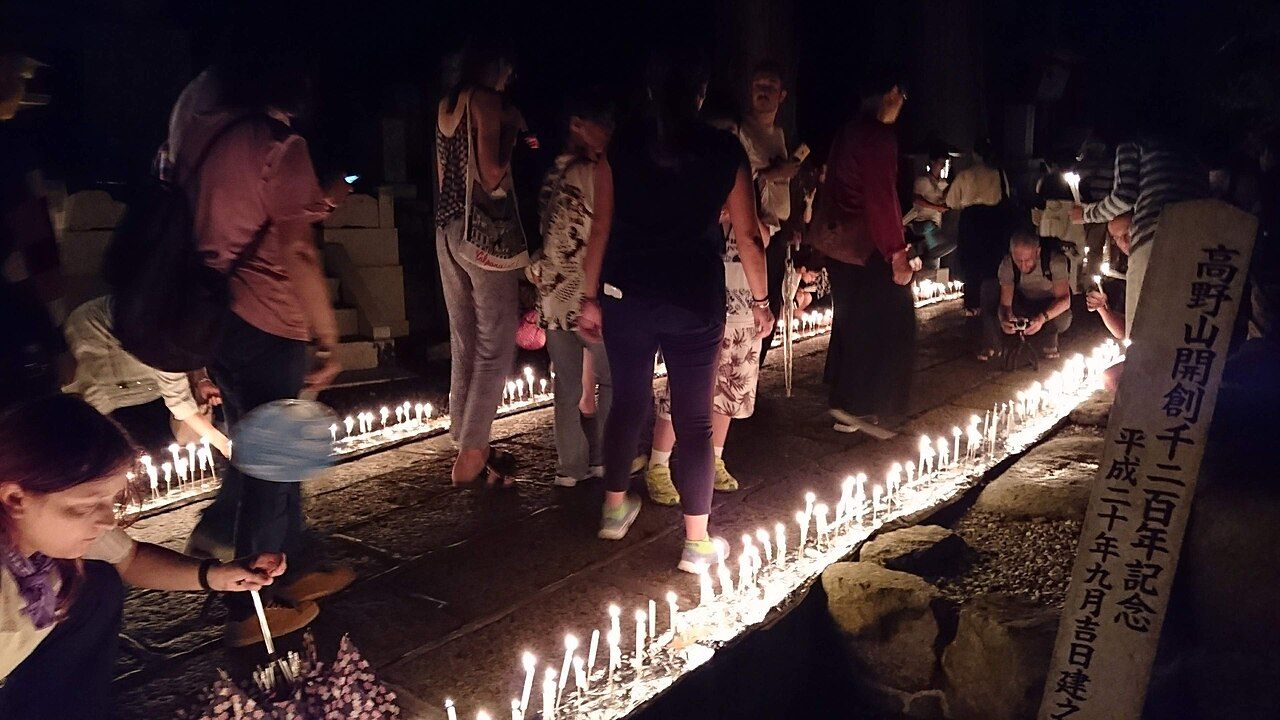
A temple stay is less a performance than a chance to be present for its ordinary shape.
Related reading:
Close by in spirit: Bodh Gaya, the place of awakening
The numbers: about 800 metres; founded in 816; more than 100 temples, about 50 with shukubo; Okunoin’s path, about two kilometres; more than 200,000 graves and memorials; inscription in 2004.