Hakone, steam and a lake under Fuji
A switchback railway climbs through Hakone’s hot spring valleys, towards a volcanic valley, black eggs and Lake Ashi, where a red torii stands in the water.
- Kind of place
- hot spring area
- House rule
- watch for gas warnings
- Country
- Japan
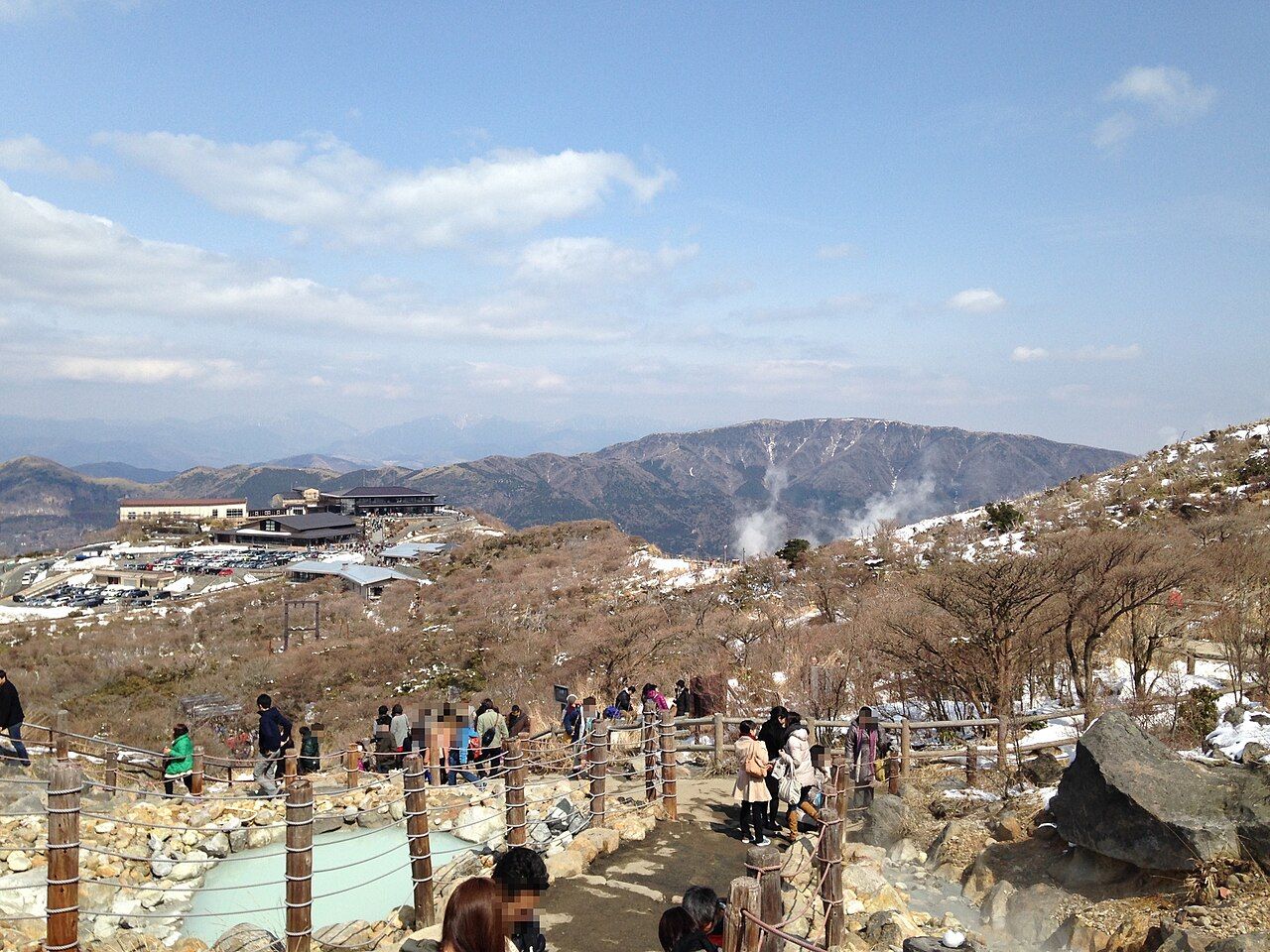
A train changes direction, then climbs on. The first thought is that someone has reconsidered the mountain. In Hakone, the railway is simply making its way uphill by switchback. What follows is a route through scattered hot spring valleys, a volcanic valley and a crater lake. It is less a perfect loop on a map than a satisfying sequence of changes in scenery.
In Hakone, the route changes character without needing to become a grand expedition.
In Hakone, the route changes character without needing to become a grand expedition.
Where is Hakone? In Kanagawa Prefecture, roughly 80 kilometres southwest of central Tokyo, and inside Fuji-Hakone-Izu National Park. That gives the area a mountain setting without putting it far from the capital. The useful idea here is not to race between sights, but to follow the change in landscape: a railway climbing into the mountains, hot spring areas scattered through valleys, then water at the end of the sequence. Hakone has several ways to hold a visitor’s attention. A lake and a volcano are not shy about applying for the same job.
What makes the train part of the story? The Hakone Tozan Railway climbs into the mountains through a series of switchbacks, changing direction as it goes. It is a pleasingly literal answer to the problem of going uphill: turn around, carry on. The movement is part of the place rather than a blank interval between sights. In Hakone, the route changes character without needing to become a grand expedition. A journey that changes direction has at least admitted the mountain is in charge.
Is Hakone only one hot spring town? No. Hot spring areas are scattered through its valleys, giving the place a broader shape than a single bath district. The springs are part of the landscape here, not a decorative afterthought attached to it. For anyone whose idea of a hot spring area begins and ends with the bath, the geography offers a gentle correction: valleys, mountain slopes and water all have a say. For another mountain hot-water landscape, there is a mountain town with a field of hot water.
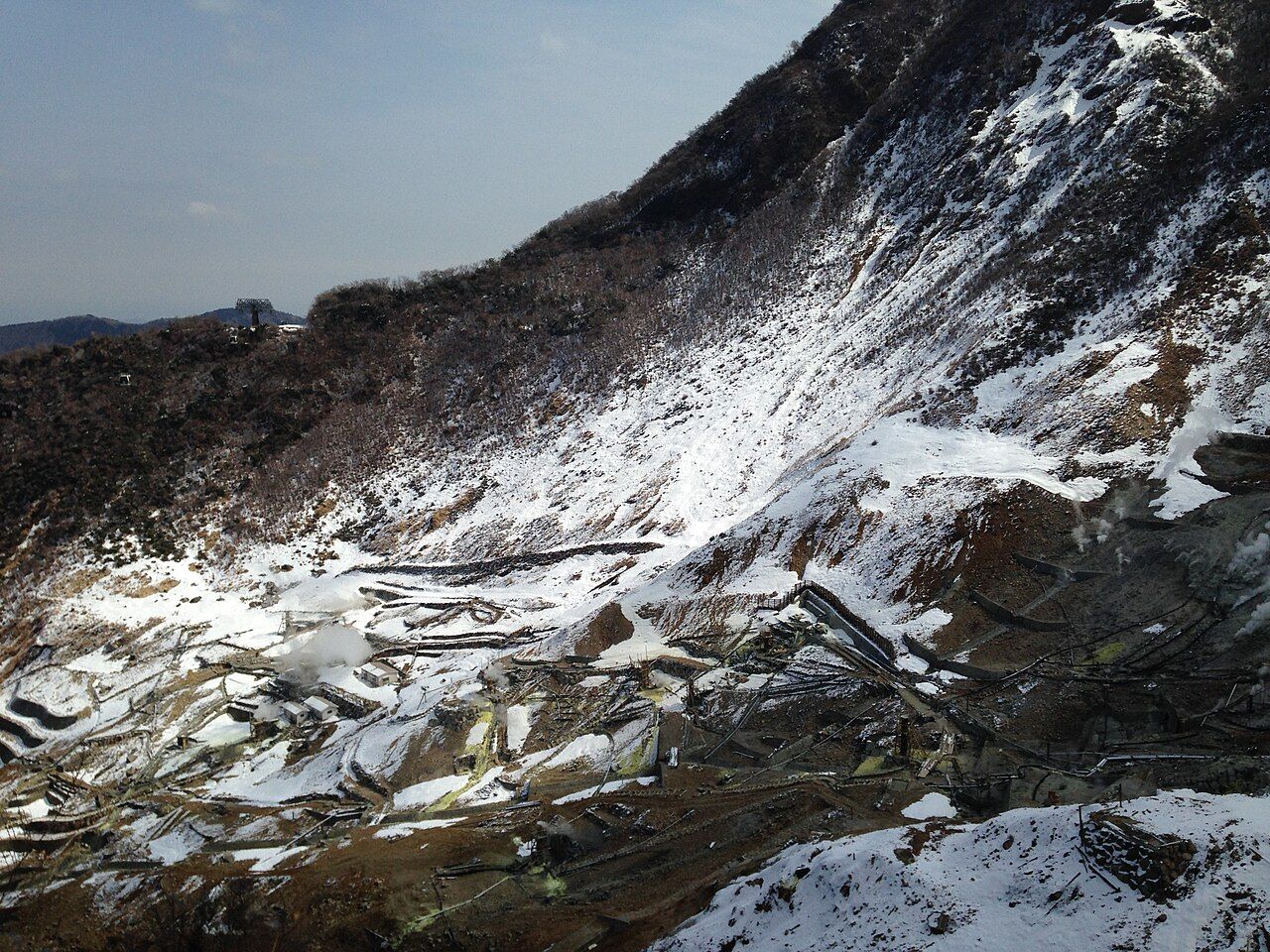
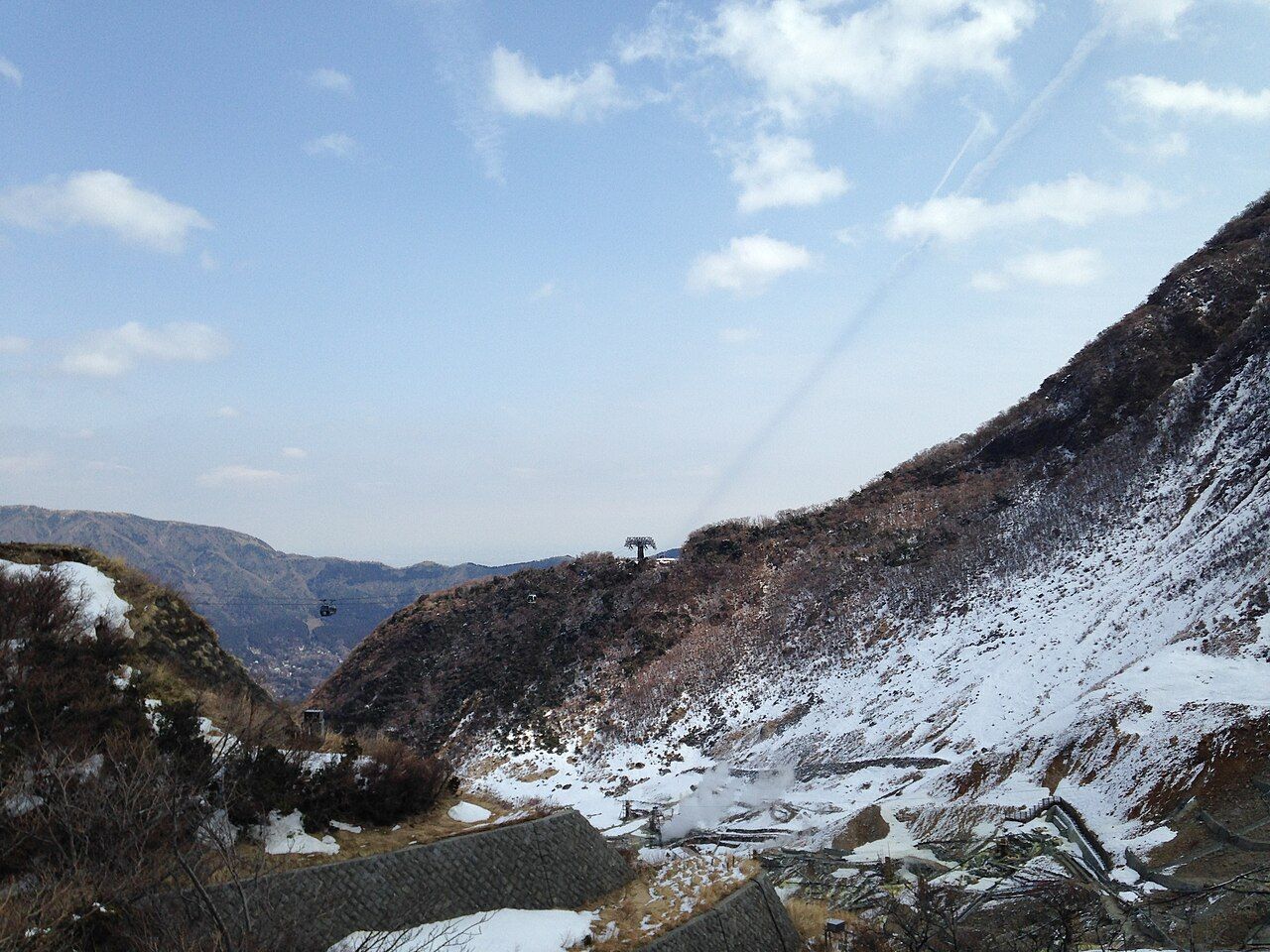
What is Ōwakudani? A volcanic valley in Hakone, formed by an eruption about 3,000 years ago. The name brings the area’s volcanic nature into focus, rather than leaving it as an abstract fact somewhere in the background. Here, the hot springs and the land belong in the same sentence. Ōwakudani is the point in the loop where the landscape feels most direct: not a view of mountains from a distance, but a valley shaped by an eruption. There is a particular honesty to a place that does not pretend its geology is just scenery.
Why are the eggs black? Eggs boiled in Ōwakudani’s hot springs turn black because of sulphur and iron in the water. A small, memorable piece of chemistry, and a useful souvenir of the valley’s character without requiring anyone to carry home a rock. The eggs make the water’s minerals visible in a way a label rarely manages. There is also a practical detail: access to parts of Ōwakudani is closed from time to time when volcanic gas levels rise. The gas warnings belong to the visit; they are part of how this active landscape is encountered.
What is at Lake Ashi? It is a crater lake in Hakone, with views of Mount Fuji on clear days. The qualification matters. Fuji is not obliged to appear on demand, a policy that will be familiar to anyone who has tried to schedule a view. The lake brings a quieter change of scale after the volcanic valley: open water in place of steep land, with the mountain sometimes present beyond it. If Mount Fuji does show itself, that is the lake’s view. If not, Lake Ashi remains a lake, which is a fairly solid offer.
And the torii in the water? A red torii gate of Hakone Shrine stands in the water at the edge of Lake Ashi. It is an image that gathers the loop together: water, mountain country and a human-made marker at the shore. Nothing needs to be added to make the scene feel composed. The torii is there; the lake is there; Fuji may be there on a clear day. In a region with hot springs scattered through valleys and a volcanic valley to visit, the lakeside gives the day a different kind of pause. For bath customs, read how to behave in the bath itself.
For another story, there is the next stop below.
Close by in spirit: Dōgo Onsen: a bathhouse with a long memory