Rotorua, where the ground gives off steam
Steam, mud pools and free foot pools make Rotorua’s geothermal ground unusually present. A day moves from Kuirau Park to the Government Gardens and Ohinemutu.
- Kind of place
- geothermal park
- House rule
- stay behind the fences
- Country
- New Zealand
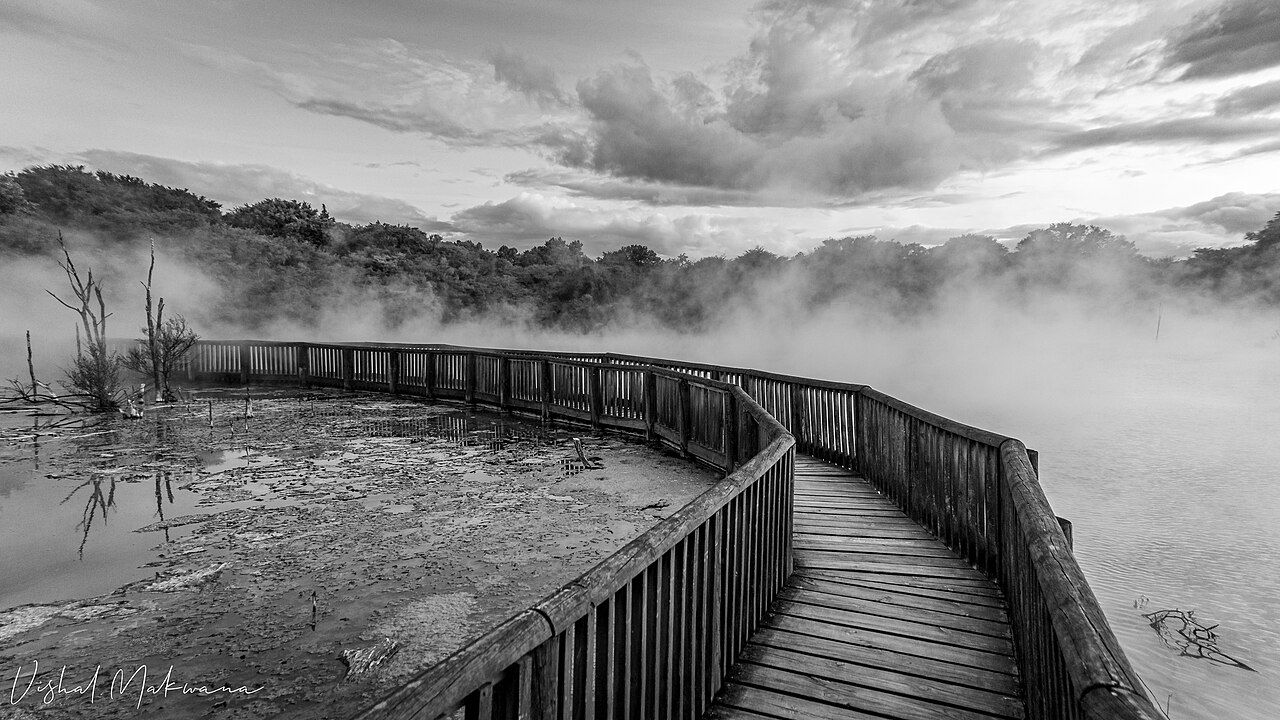
What does Rotorua smell like? Hydrogen sulphide from geothermal vents hangs over much of the town. It is not a fragrance that needs a great deal of introduction; the ground has already made its point. Rotorua lies on the southern shore of Lake Rotorua, in the North Island of New Zealand, and steam rises in places where a town might otherwise appear to be minding its own business.
Where does a morning begin? At Kuirau Park, in central Rotorua, where steaming lakes and mud pools make the geothermal activity hard to mistake. The park also has free foot pools. They offer a direct way to feel the heat, rather than simply watch it rise. A fine distinction, perhaps, but feet tend to be more convincing than scenery.
Kuirau Park
What is the useful thing to know before taking in the pools? Signs and fences mark ground where hot water lies close to the surface. Stay behind the fences. That is the plain instruction, and the one worth keeping in mind while looking at a landscape that makes the word “ground” sound less dependable than usual. The steam is striking; the boundary is there for a reason.
How should the park be read? As a place where water, mud and heat are visible parts of the town, not as a collection of curiosities that can be approached any which way. The free foot pools let visitors feel some of that heat; the signs and fences show where not to go. Both are part of the visit. The spectacle is not improved by ignoring the practical information beside it.
If the steam sends the mind elsewhere, there is the Japanese town of steaming ponds and an Icelandic valley of steam vents. Rotorua needs no borrowed comparison, though. Here, the smell of hydrogen sulphide is already part of the town’s answer to the question of what lies beneath it.
Close by in spirit: Budapest's thermal baths, pool by pool
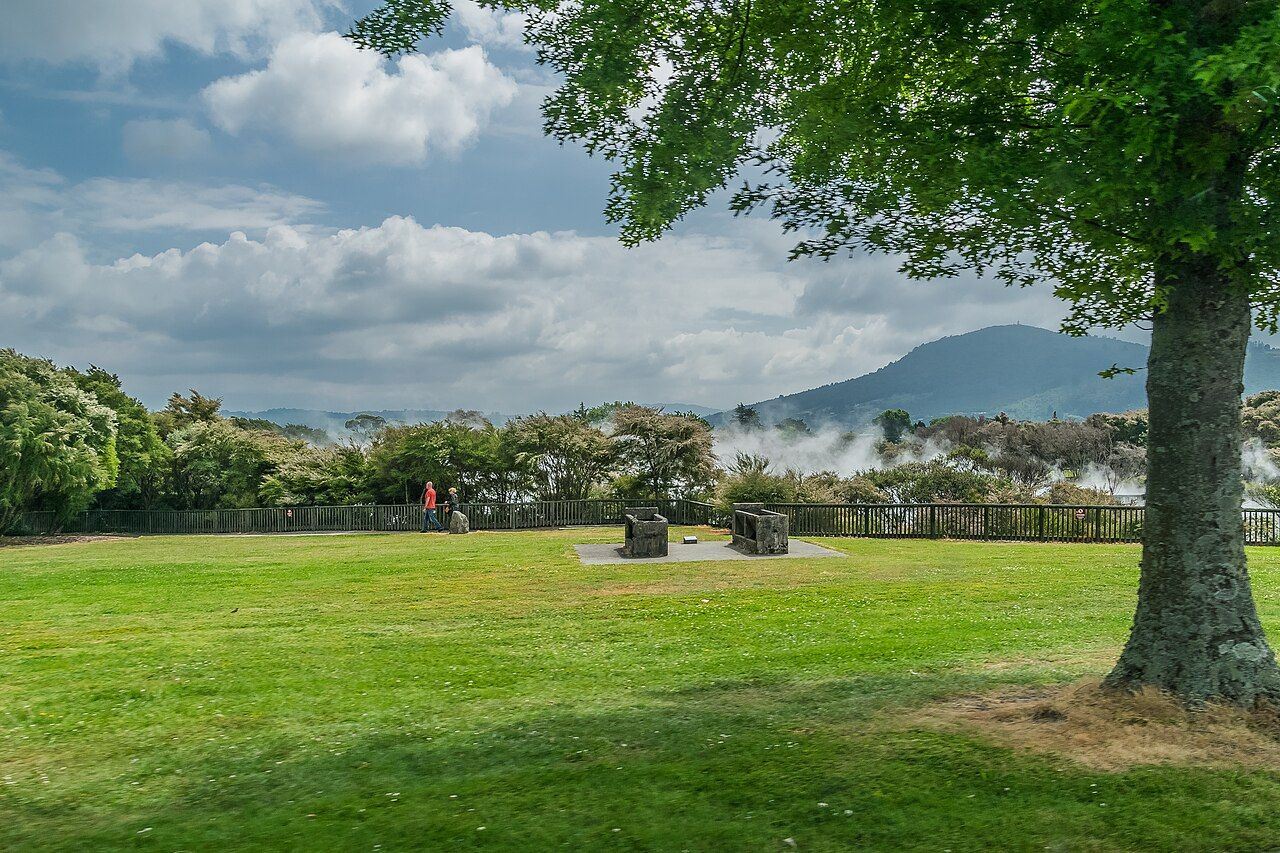
Does The Rotorua Lakes Council have a part in this? It looks after the town’s parks, including Kuirau Park and the Government Gardens. That is useful context for a day spent moving between geothermal features and public green space. The parks are not separate from the town’s story; they are among the places where its particular ground is visible.
Government Gardens
What belongs in the middle of the day? The Government Gardens, which surround the Tudor-style Bath House. The building opened in 1908 and is now home to the Rotorua Museum. The museum closed in 2016 for earthquake strengthening. The gardens still offer a change of scene from steaming pools and mud: a formal setting around a building whose history is tied to the geothermal town.
Is the Bath House a museum visit? The building is home to the Rotorua Museum, but the museum closed in 2016 for earthquake strengthening. The fact itself is enough. The gardens and the building can still be part of the itinerary in thought, even when the museum is closed. A closed door is not an invitation to invent what is on the other side.
For other ways of thinking about hot water and bathing places, the site also points to a hot pool high in the Rockies. That is a different story. Here, the day’s thread is the geothermal ground visible in Rotorua’s parks, and the care needed around it.
Ohinemutu
What makes late afternoon different? A move to Ohinemutu, a Māori village on the lakeshore. Te Arawa is the iwi, or Māori tribal group, whose lands include the Rotorua lakes. That context matters. Ohinemutu is not simply another place to point a camera at steam; it is a village with its own presence beside the lake.
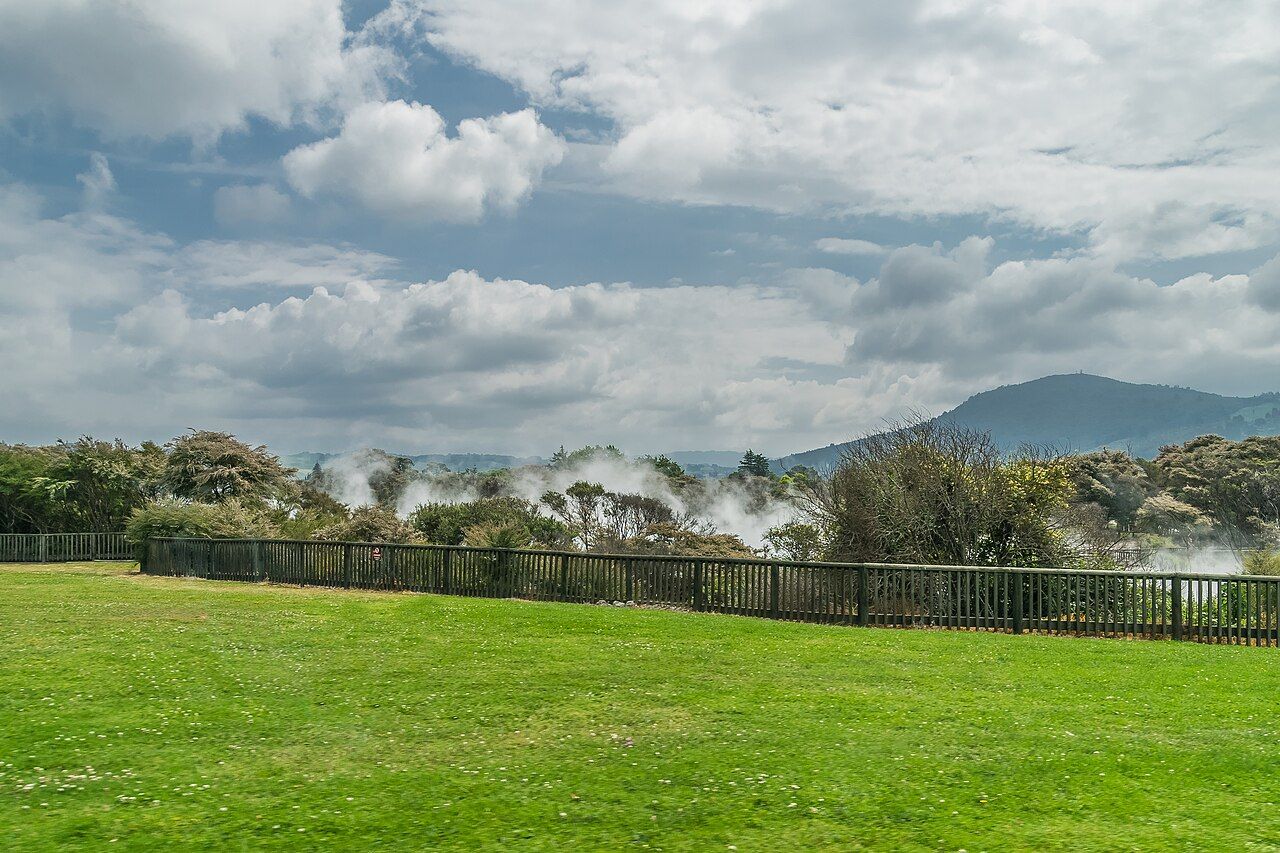
What is there to see? St Faith’s Church and a carved meeting house. Steam rises from vents between the houses and graves. The steam is not scenery set apart from the town; it rises between houses and graves.
The steam is not scenery set apart from the town; it rises between houses and graves.
That sentence is worth keeping in view, because it changes the way the geothermal detail lands. The ground is not an attraction detached from where people live and are buried. Te Arawa’s lands include the lakes around Rotorua, and Ohinemutu makes the human setting part of what is seen. The facts here are spare, and should stay that way: a village, a lakeshore, a church, a carved meeting house, and steam among the houses and graves.
Where can a reader find more on Rotorua’s geothermal areas and Māori culture? Tourism New Zealand’s site, newzealand.com, covers both. It is a useful companion to a day shaped by looking carefully: first at the places where heat appears, then at the community and landscape the town belongs to.
The numbers: The Bath House opened in 1908; the Rotorua Museum closed in 2016 for earthquake strengthening.
My favourite part is how plainly Rotorua lets the ground speak, while the fences make clear where the conversation ends.