Bath: a spring, a museum and the streets around it
What does a city built around a hot spring ask of its visitors? Start with a Roman complex that is for walking through, then look up and around.
- Kind of place
- historic baths
- House rule
- no swimming in the Great Bath
- Country
- United Kingdom
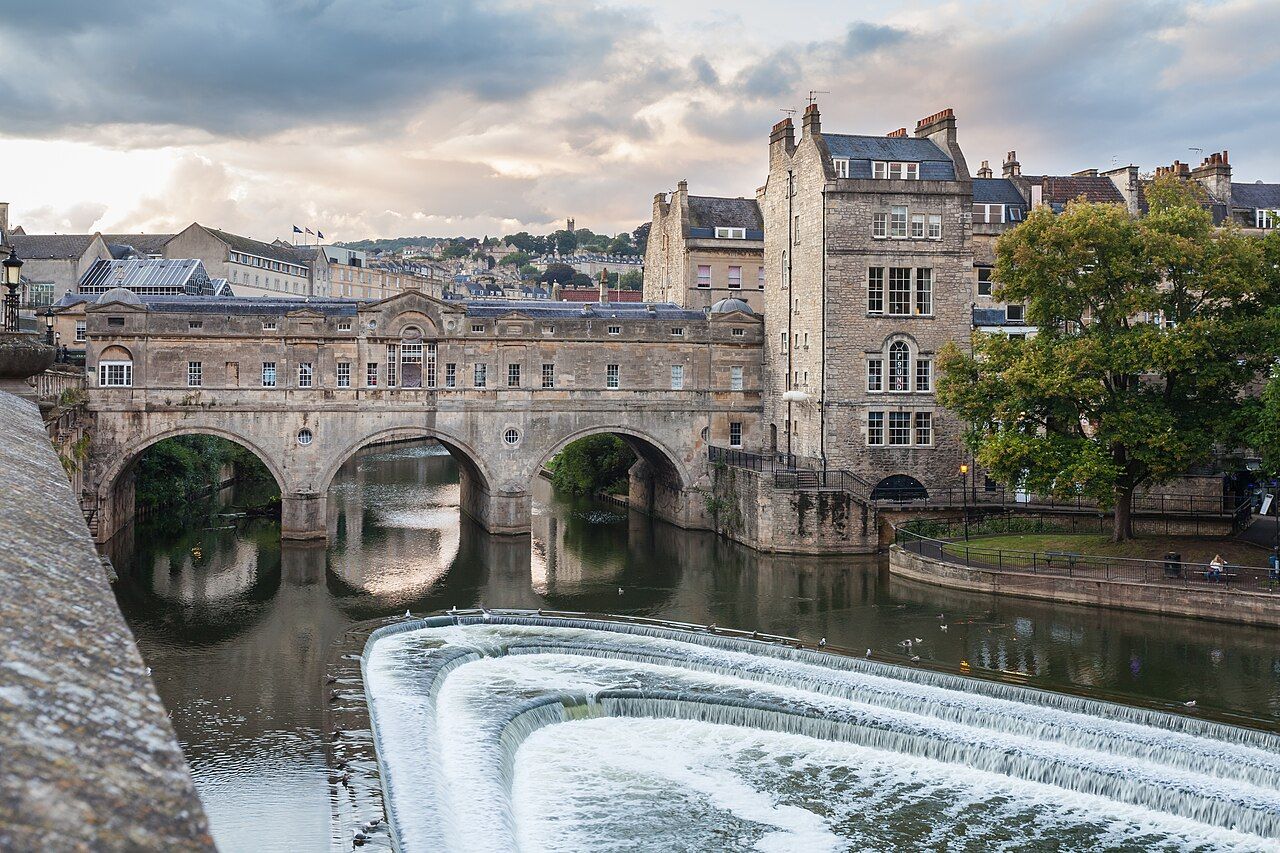
What is Bath when the pool is not for swimming? A spring, a Roman complex to walk through, and a city whose buildings make a strong case for looking up. The order is fairly clear. The expectations may need a small adjustment.
Why did the Romans build here? Hot water rises from the ground in the centre of Bath at about 46 degrees Celsius. From about the first century AD, the Romans built a bathing complex and a temple to the goddess Sulis Minerva around the spring. The water is the beginning of the story, but not its only subject. The buildings, the temple and the objects found in the spring give the visit its shape. It is a lot to ask of one hot spring, and it seems to have managed.
Can visitors swim in the Great Bath? No. The large open pool at the centre of the Roman complex is lined with lead and is no longer used for bathing. The Roman Baths are run as a museum, and visitors walk around the pools, the temple courtyard and the remains of the bath halls. The Great Bath is the centre of the story, and not a place to swim. That distinction is worth making plainly: a famous pool can still be a pool for looking at. Bath does not owe anyone a dip.
The Great Bath is the centre of the story, and not a place to swim.
What does walking through the museum mean? The route takes visitors around the pools, the temple courtyard and the remains of the bath halls. The emphasis is on seeing the complex, rather than using it as a bathing place. That makes the visit less about imagining a swim and more about noticing how much was built around the spring. There is a useful quietness to that change of plan: the water is still at the centre, but the visitor’s job is to look. A small adjustment, perhaps, but a good one.
What are the curse tablets? They are small sheets of lead with messages to the goddess, found in the sacred spring and shown in the museum. The name has a dramatic ring; the objects themselves are small. I like this detail because it makes the spring feel less like a tidy architectural centrepiece and more like somewhere people brought their thoughts, in writing, to Sulis Minerva. The tablets do not need much embellishment. Their scale is enough to make the grand buildings feel connected to individual visitors from long ago.
Close by in spirit: A slower circuit through three spa towns
Why is the water green? Algae grow in the warm water, which is open to the sky. The result is a pool with a colour that is part of what visitors see, rather than an invitation to enter. There is something pleasingly direct about the explanation: warm water, open sky, algae. No mystery needs to be added. The green gives the Great Bath a presence of its own, and the temperature of the spring offers a reminder of the heat rising from below. This is not a swimming scene. It is a view with a clear reason behind it.
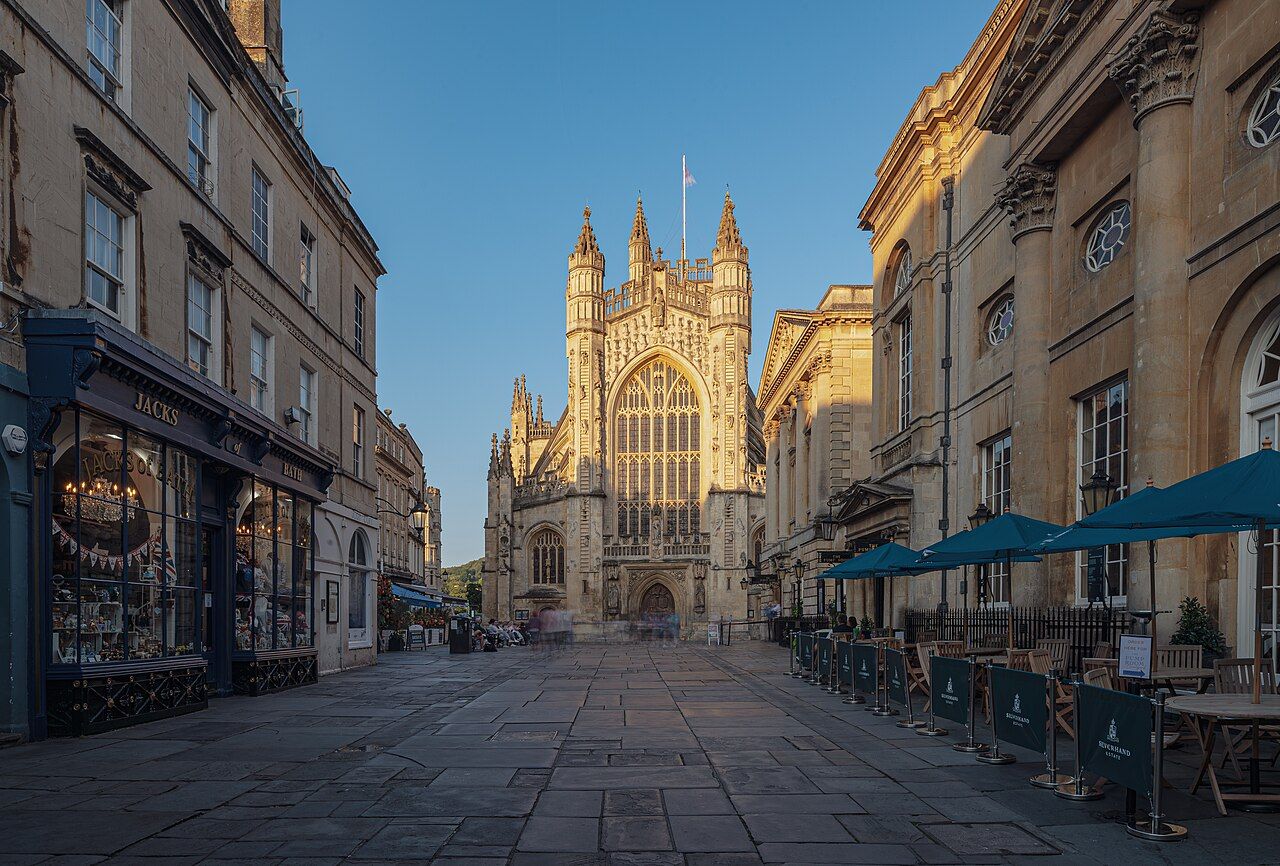
What is there to look at beside the Roman Baths? Bath Abbey stands next to them. Its west front shows angels climbing ladders to heaven, a detail that rewards a pause and a second look. The change of subject is abrupt in the best way: Roman pools, then a church front with its own very literal upward movement. I have a soft spot for architecture that gives the eye somewhere to go. Here, the angels do not leave much doubt about the direction. The abbey is a neighbour, not an afterthought.
What is the Royal Crescent? It is a curved terrace of 30 houses, built between 1767 and 1774 to designs by John Wood the Younger. The curve does much of the work. It is a clear, composed shape, and a favourite kind of city view: one that makes a long run of buildings feel like a single gesture without making it feel fussy. The dates give the terrace a place in the city’s story; the curve gives the eye something to follow. Bath’s architecture is not shy, but it does know when to hold a line.
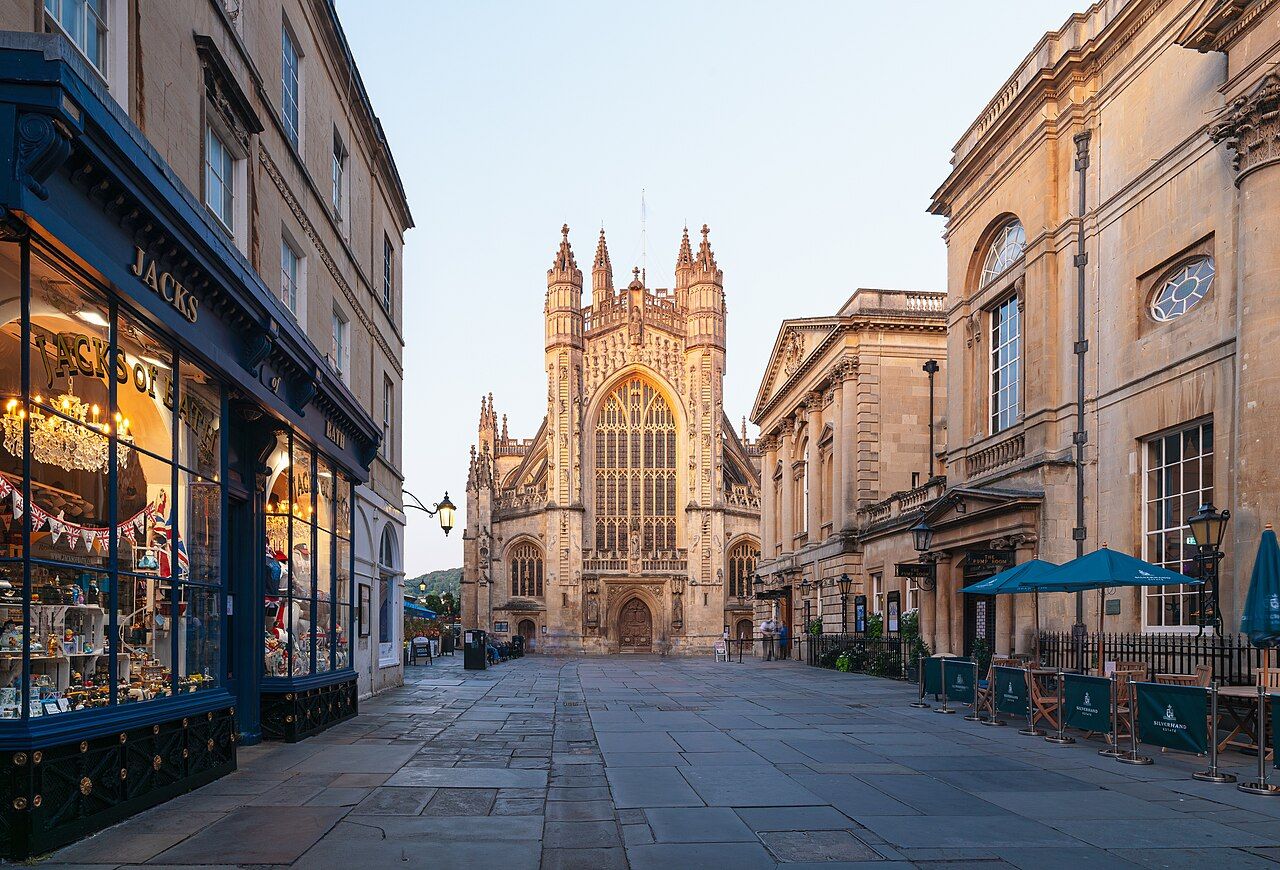
What crosses the River Avon? Pulteney Bridge, designed by Robert Adam, with shops built along both sides. It is a bridge with more going on than the business of getting across, and I prefer that sort of city detail to another uninterrupted stretch of paving. The shops are part of the bridge itself, so the crossing and the buildings meet in one place. It is not a grand discovery, just a good reason to look at a bridge for longer than the crossing requires.
How does Bath fit into the wider spa-town story? Bath is the only city in the United Kingdom listed as a whole as a World Heritage site, inscribed in 1987. It is also one of the eleven Great Spa Towns of Europe, listed in 2021. Those are useful frames for the city, but the visit stays grounded in particulars: the spring, the Roman complex, the abbey, the crescent and the bridge. For the rest of Europe's listed spa towns, Bath is a fitting point of comparison, with a spring at its centre and a city built around it.
Bath is at its best when the walk moves from the green pool to the city’s unhurried curves.
The numbers: spring water about 46 degrees Celsius; Roman complex from about the first century AD; Royal Crescent, 30 houses, built 1767–1774; World Heritage inscription, 1987; Great Spa Towns listing, 2021.