Meteora, and the climb between questions
A morning-to-evening visit among sandstone towers, with the old rope ascent, cut steps and a clear answer on what visitors wear.
- Kind of place
- monastery visit
- House rule
- skirts and long trousers
- Country
- Greece
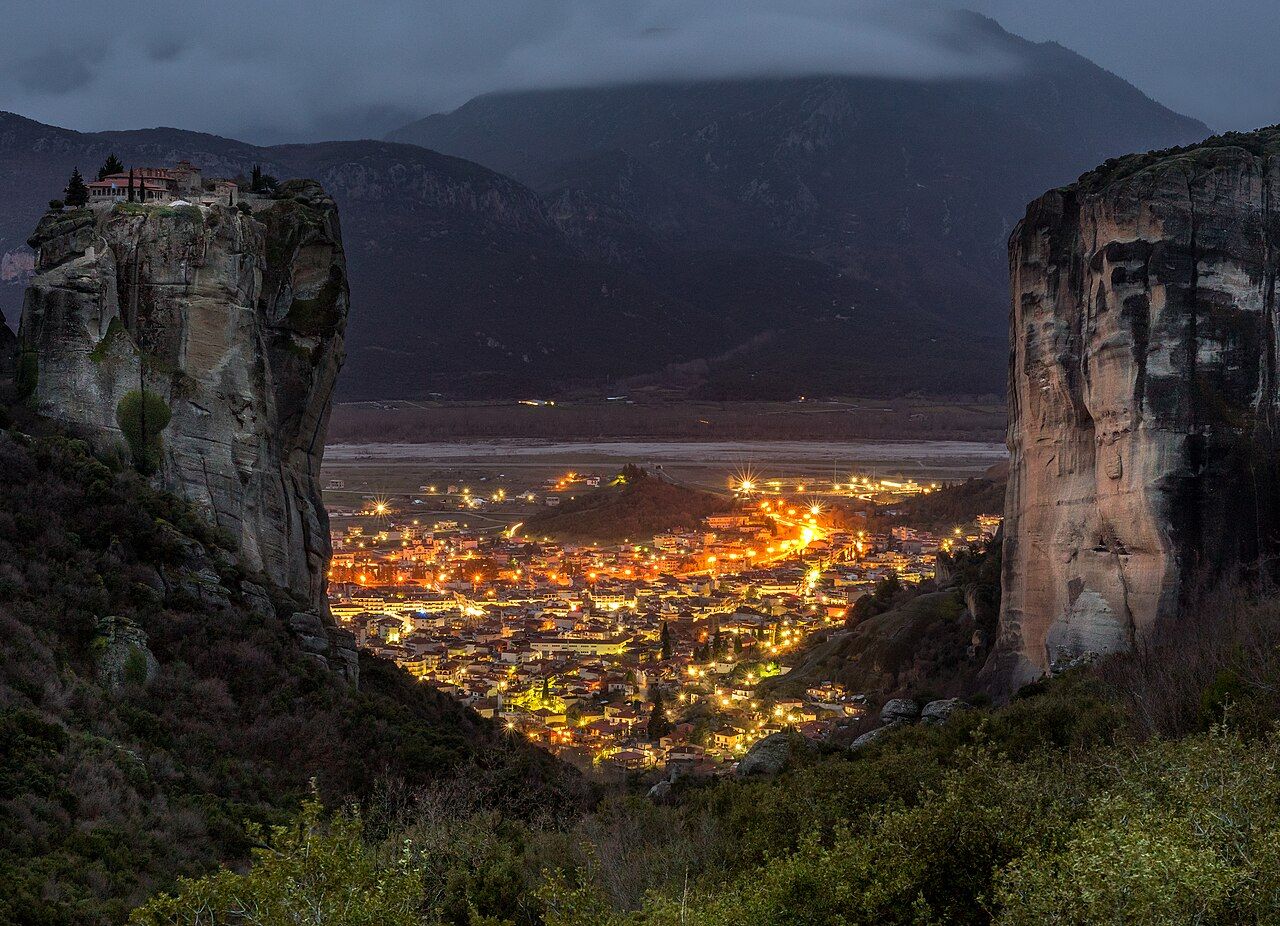
A visitor can arrive with one small worry before the first step: what is proper to wear? At Meteora, the answer is plain, which is a kindness in a place where the rocks already do enough to make a person consider their footing. The sandstone towers rise above Kalambaka in Thessaly, and monasteries sit on top of them. The visit begins with a climb, and with the useful realization that not every question needs a complicated answer.
Morning: how did people reach the monasteries? For centuries, people and goods were hauled up in nets and baskets on ropes. It is a route that makes the modern preference for stairs seem less like a hardship. Steps were cut into the rock in the 1920s, giving visitors another way up. The change is practical; the setting remains a rather persuasive argument for looking where one is going.
What should visitors wear? Women must wear skirts below the knee, and men must wear long trousers. That is the rule, not a suggestion to be negotiated with the weather or the contents of a suitcase. It is worth treating the clothing question as part of the visit rather than a last-minute puzzle. The monasteries are active, and the setting is not simply a view arranged for passersby.
For a different mountain setting with an abbey, there is a Catalan abbey on a jagged mountain. The resemblance is enough to make the thought travel; the details here belong to Meteora.
Midday: what happens to the monks’ working day while visitors are there? There is no useful timetable to offer, and a visitor need not turn the monks’ working day into an item on an itinerary. A restrained manner is a good starting point. Keep conversation quiet, give the place room, and resist the familiar traveller’s urge to make every pause into a performance. Silence may not be a timetable, but it is a considerate way to arrive.
Meteora’s monasteries were begun by monks in the 14th century. Six are still active today. Those facts say something about the long life of the place, but they do not hand over the shape of an ordinary day inside it. Better to accept the limit. A visit can be attentive without pretending to know what is not visible.
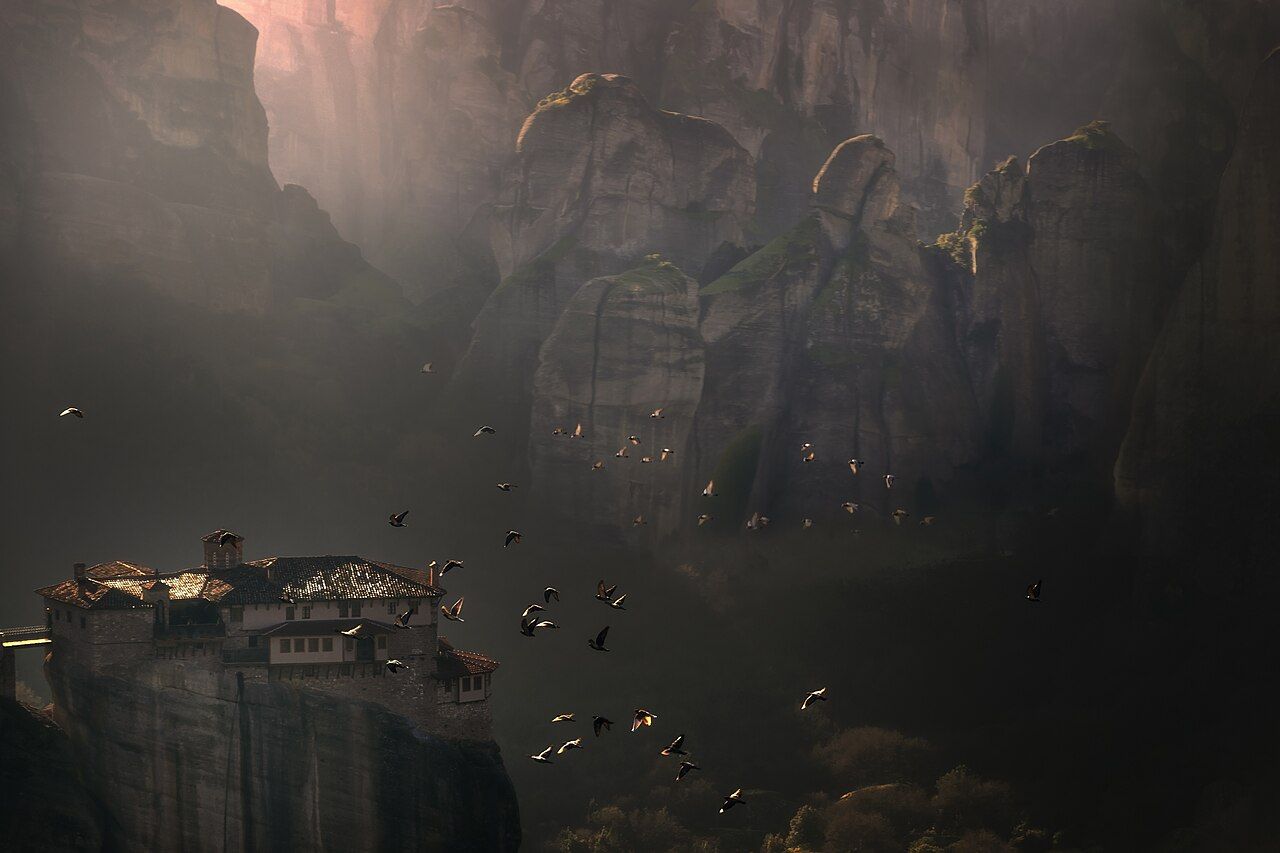
The climb also invites comparison with mountain shrines on a forest trail, where the approach is part of what gives a place its character. At Meteora, the approach is unusually hard to ignore: first ropes and baskets, then steps cut into rock. One does not need to embellish it.
Late afternoon: can every monastery be visited on any day? No. Each monastery closes on one day of the week. The particular day is not given here, so the sensible answer is simply to treat each monastery as a place with its own closed day, rather than assume the doors are always open. A small limit is still a limit, even when the scenery looks as if it ought to make exceptions.
Meteora received UNESCO World Heritage recognition in 1988. That recognition sits alongside the more immediate facts of a visit: sandstone underfoot, steps cut into rock, and rules about clothing. For more on places where quiet shapes the experience, see:
Close by in spirit: What a silent retreat is really like
The numbers: six active monasteries; steps cut in the 1920s; UNESCO recognition in 1988. The climb is the part I like best.