The Via Francigena through Tuscany, one slow question at a time
A walk along the Tuscan stretch of the old pilgrim road, from hill towns to the Val d’Orcia—and to Bagno Vignoni, where the square is a thermal pool, not a bath.
- Kind of place
- pilgrimage
- House rule
- no bathing in Bagno Vignoni's square
- Country
- Italy
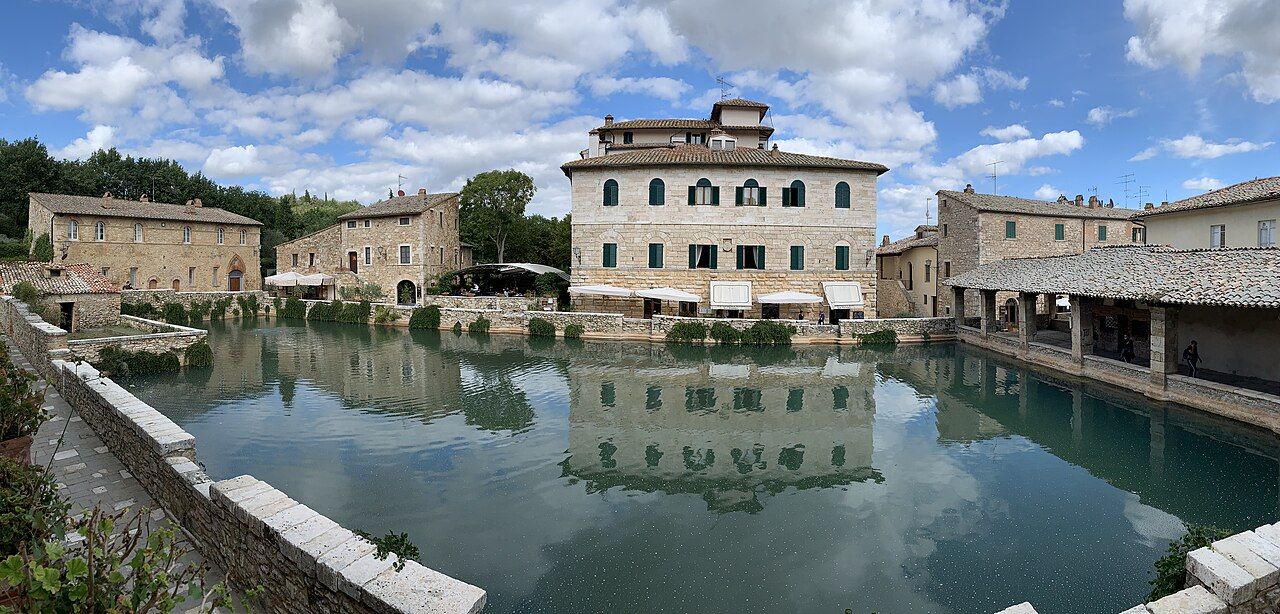
The square at Bagno Vignoni looks like a neat ending to a walking day: a pool of thermal water, right in the middle of the village. Then comes the detail that changes the plan. Bathing is not allowed in it. The Via Francigena has a way of making the pace part of the point, and this is a useful lesson in looking before declaring a square a bath.
What follows is a way to think through the Tuscan stretch by the day’s loose divisions, not a timetable. The route runs from Canterbury to Rome, and in Tuscany passes through hill towns and the Val d’Orcia. There is room here for history, walking, and the mild disappointment of a pool that is for looking at.
San Gimignano
Morning. What is the road asking us to follow? The Via Francigena follows the journey of Sigeric, Archbishop of Canterbury, who recorded his stops on the way home from Rome in about 990. That gives the route an appealingly practical beginning: someone made a record of the way back. The walk now carries that older journey forward, though the idea is easier to hold than any grand picture of pilgrimage. One step, then another; the road does not need a speech.
The route was named a Cultural Route of the Council of Europe in 1994. That is a larger frame for a walk that, on the ground, passes through named places: San Gimignano, Monteriggioni and Siena. They are the points at which a line on a map becomes a sequence of places, and the sequence is a good reason to resist rushing through the day.
Monteriggioni
Midday. What should the eyes be doing? Monteriggioni is a walled village with a ring of towers built in the 13th century. The fact is compact. The view, as an idea, is not: a ring enclosing a village, encountered on a route that has already carried the walker through other places. My preference is for this kind of detail, where a structure makes its shape legible without requiring a paragraph of admiration.
Does the route need to be turned into a test? No. It is a pilgrim road, and the Tuscan portion has a clear set of places to hold in mind. The maps and stage lists kept by the European Association of the Via Francigena Ways offer a way to think about its stages. That is the practical part; the rest is deciding what kind of attention to bring. A walk can be a sequence to complete, or a way to spend time in a place. The road permits both interpretations.
For another scale of pilgrimage, there is a short pilgrim walk in the Borders. Short is a relative comfort, of course. Even so, it is a useful reminder that the word “pilgrim” does not require one fixed distance or one particular mood.
Close by in spirit: The Camino’s last hundred kilometres
Siena
Late afternoon. Is there a point when the walk becomes a view? There may be, though it is hard to put on a schedule without making the day sound like a very earnest appointment. The Tuscan route passes through Siena, as well as San Gimignano and Monteriggioni. Each name marks a change of place; none needs to be promoted into a finish line simply because it is easy to put in a sentence.
The road is a journey from Canterbury to Rome, but the Tuscan section is not merely the stretch between two more famous ends. Its hill towns and the Val d’Orcia give the walk its own shape. A traveller may be tempted to treat every pause as a chance to get ahead. I would rather let a pause be a pause. It is an unambitious preference, which is one reason it survives contact with an itinerary.
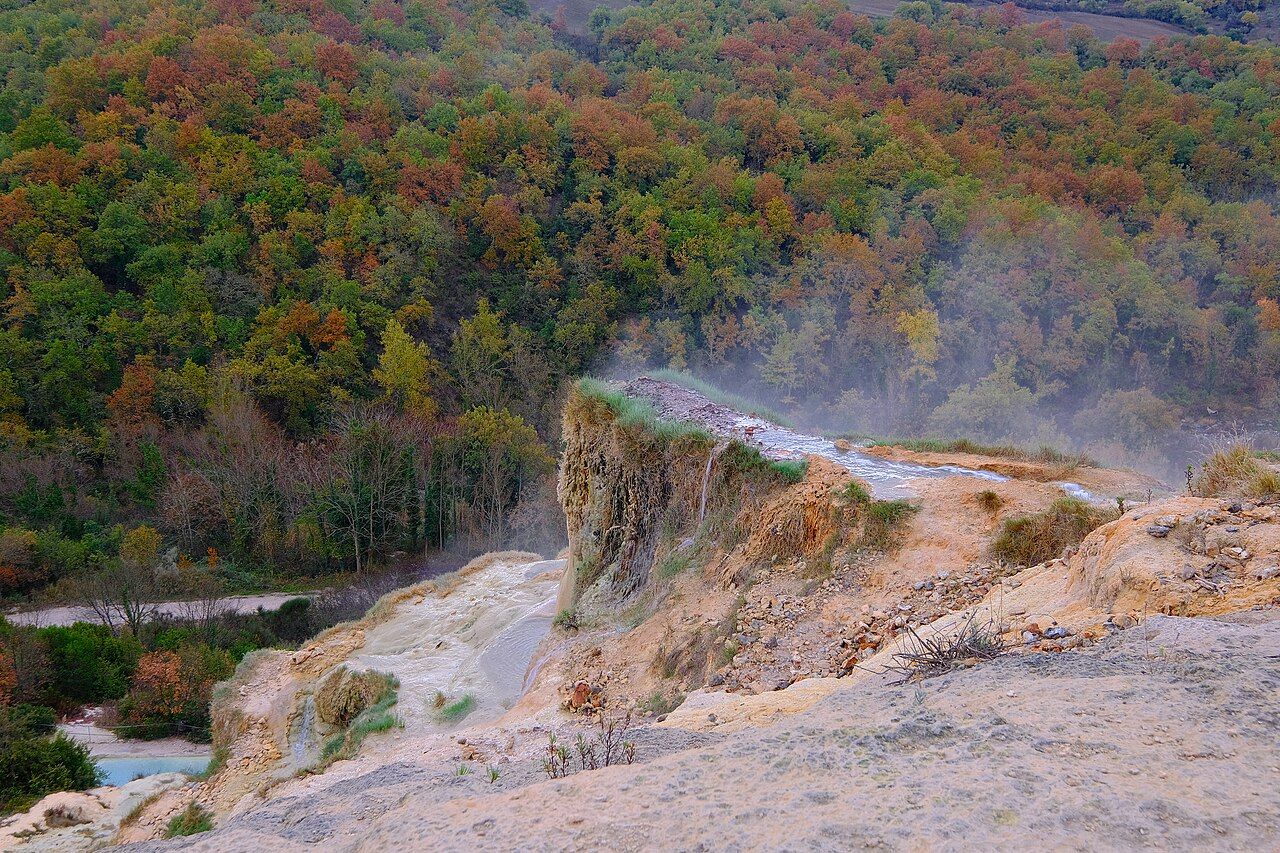
What if the pull of warm water is stronger than the pull of another stage? Tuscany has a spa town on the Tuscan plain, and the warm cascades of the Maremma. They make a separate thought from the Via Francigena’s walking line: a reminder that the region’s thermal water can be part of a different kind of day. Bagno Vignoni’s central pool, though, remains a pool to look at rather than enter.
Val d’Orcia
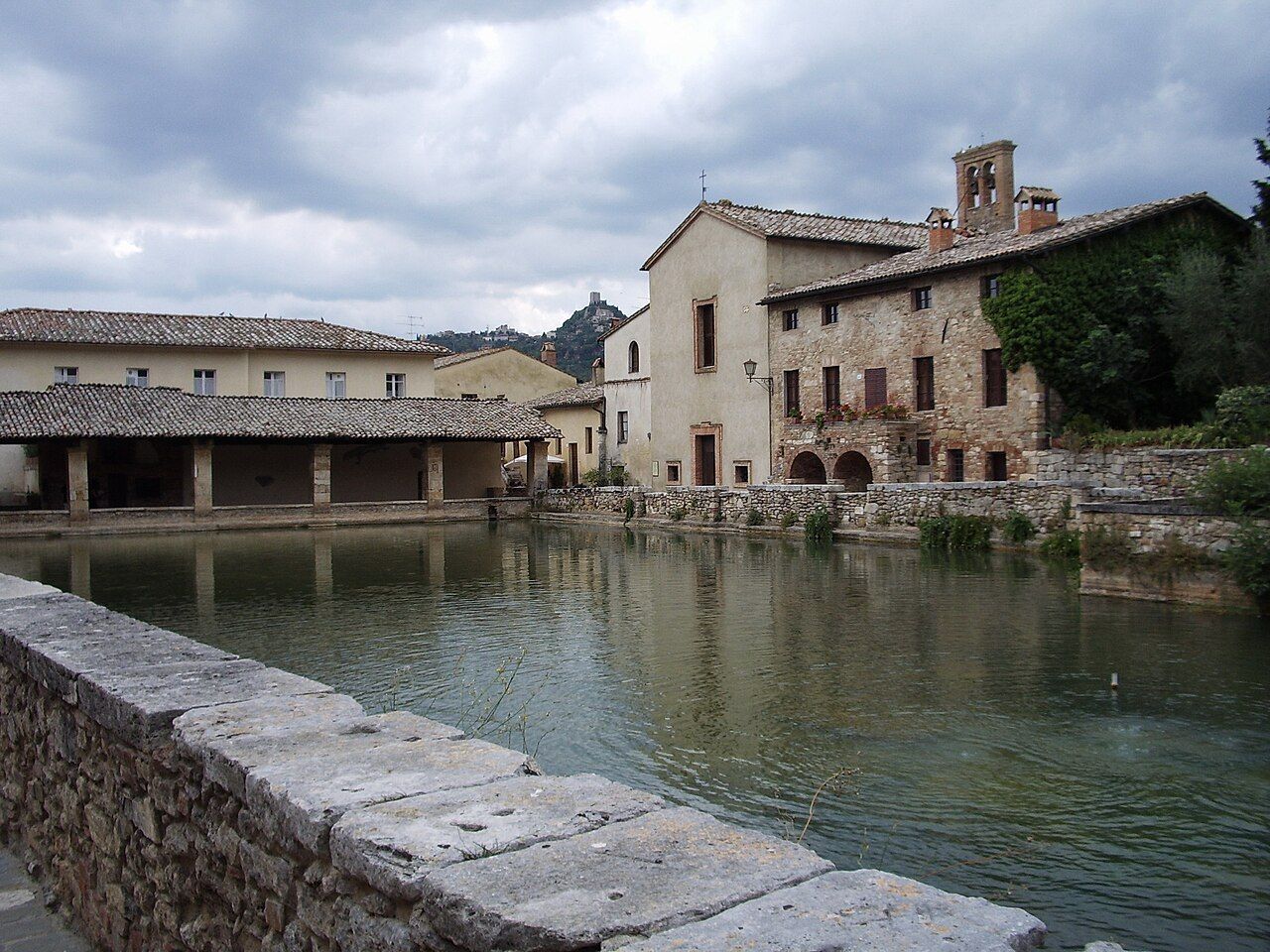
Late afternoon. What does the landscape ask for? The Val d’Orcia received UNESCO World Heritage status in 2004. That is enough to establish its place in the story; it does not need borrowed adjectives. The useful answer for a walker is simpler: this is one of the named parts of the Tuscan route, and it is where Bagno Vignoni sits.
How should the day be measured here? Not by how quickly it can be compressed into a highlight. The route has a long direction, from Canterbury to Rome, and a human one, through towns and the valley. Both can be true at once. The slower version leaves space for the fact that a village square can be a thermal pool, and that being near water does not mean being invited into it.
A pilgrim who walks at least the last 100 kilometres to Rome can receive a certificate called the Testimonium. It is a clear, practical detail at the far end of the route. For the Tuscan walker, the more immediate question is what to do with the stretch at hand: keep moving, pause, or allow the place to be more than a mark between destinations. The answer need not be grand.
Would I choose the walk for its combination of named towns, an old route and the Val d’Orcia? Yes. The appeal is in the measured sequence, not in pretending that every moment has to become a discovery. Bagno Vignoni makes the point especially well: the square is a pool, the water is thermal, and bathing is not allowed. The view is still a perfectly good reason to stop.
My favourite part is the pause in Bagno Vignoni, precisely because the pool is not a bath.
My favourite part is the pause in Bagno Vignoni, precisely because the pool is not a bath.
The numbers: Sigeric’s stops were recorded in about 990; Monteriggioni’s towers date to the 13th century; the route was named in 1994; the Val d’Orcia received UNESCO World Heritage status in 2004; the Testimonium requires at least the last 100 kilometres to Rome.