Forest bathing in Yakushima’s cedar woods
Shinrin-yoku asks for unhurried time among trees. On Yakushima, rain, moss and ancient cedars give that simple idea plenty to occupy a slow walk.
- Kind of place
- forest walk
- House rule
- stay on the boardwalks
- Country
- Japan
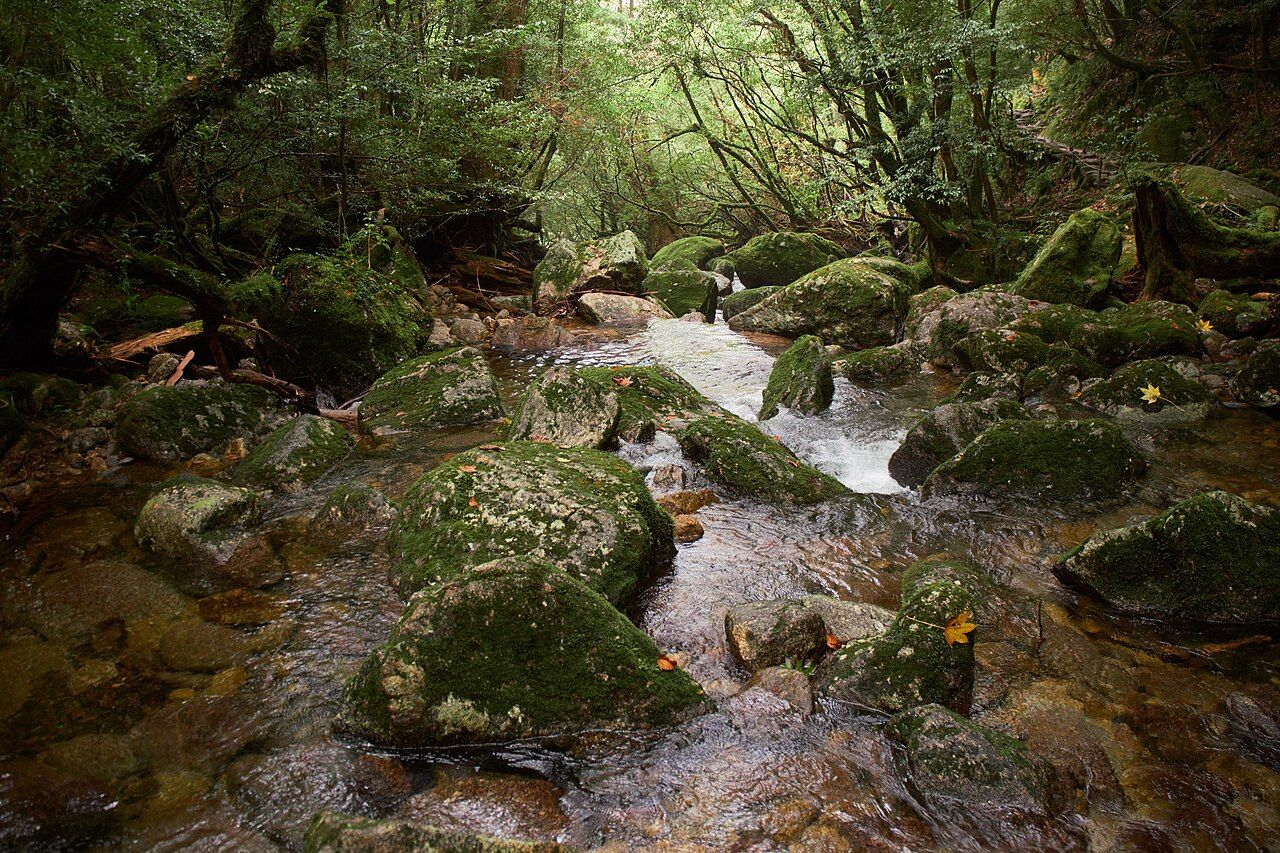
A visitor comes to Yakushima hoping to see an old cedar. Rain gets into the plan, as it tends to on a very wet island, and there is suddenly time to notice the moss, the sound of falling water and the smells around the path. This is not a dramatic change of itinerary. It is more like the itinerary quietly losing an argument.
Yakushima
What is forest bathing? Shinrin-yoku is the Japanese idea of spending unhurried time in a forest, walking slowly and paying attention to sounds and smells. The term was coined by Japan’s Forestry Agency in 1982. The name can suggest a more elaborate undertaking than the practice requires. A walk is not a performance, and the forest has no list of things it is supposed to do. The point is to give the place time to register. Walking slowly is not a failure to get somewhere. On Yakushima, where rain is part of the island’s character, it may also be the pace that makes most sense.
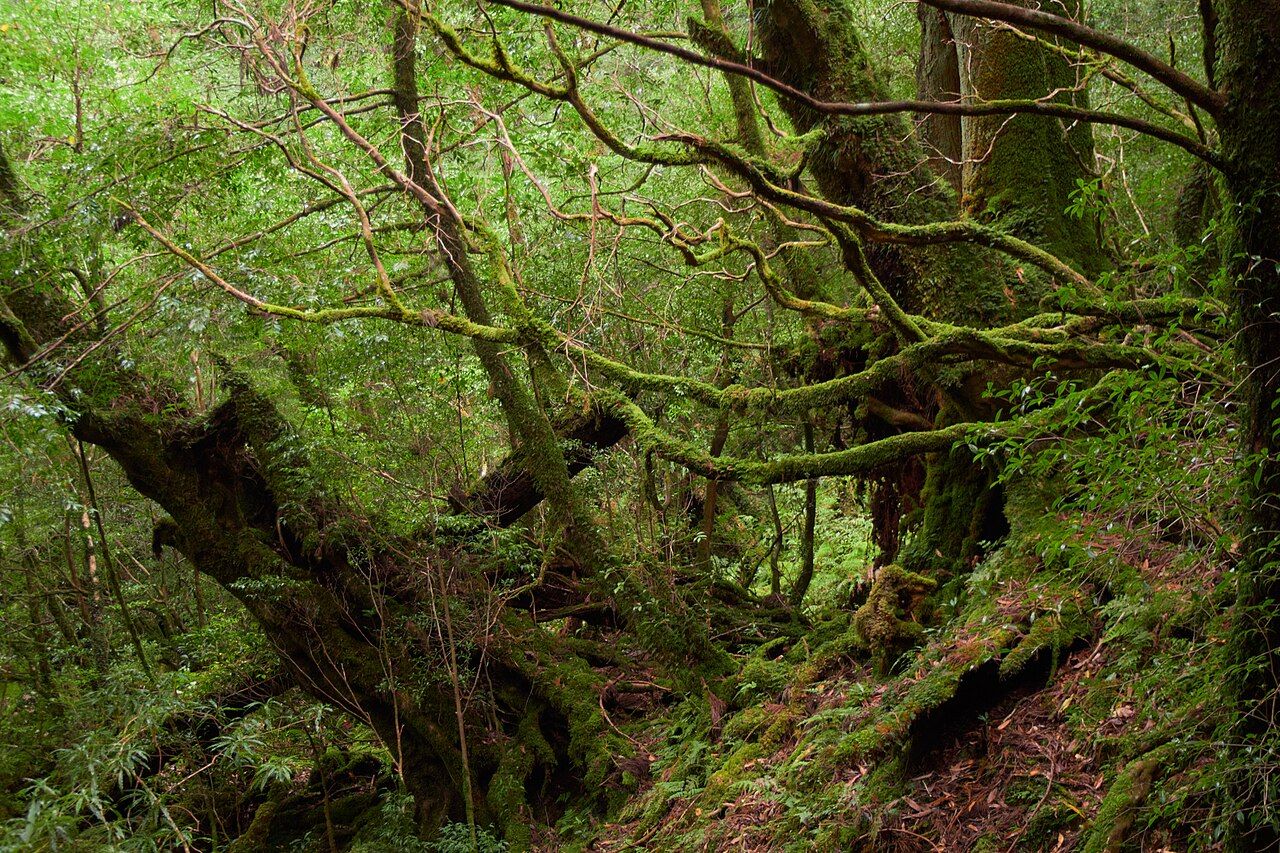
Walking slowly is not a failure to get somewhere.
Why Yakushima? It is a round, mountainous island south of Kyushu in Kagoshima Prefecture; UNESCO inscribed it on the World Heritage list in 1993. The island’s cedars more than 1,000 years old are called yakusugi. That word gives age a local shape, but it does not make the trees into items to tick off. A forest is still a forest when nobody is pointing at its oldest resident. Here the combination of mountain, cedar and persistent rain offers a clear setting for shinrin-yoku: walk, notice what is around, and resist the urge to make every minute useful. The island does not need a more complicated instruction than that.
What does the rain change? A local saying holds that it rains 35 days a month. The arithmetic is plainly not the point; the rain has become part of how people describe Yakushima. For a slow walk, it can shift attention from distance to what is close by: water falling, moss on rock, the damp air and the smells that come with a wet forest. No grand revelation is required. It is enough to notice that weather is not merely something happening between a visitor and the scenery. It is part of the scenery. Those who prefer a forest to stay dry may find this arrangement less persuasive. The moss, at least, has made its position clear.
Where can a walk stay close to the forest? Shiratani Unsuikyō is a ravine of moss-covered rocks and old trees on Yakushima. Its description already gives a walker plenty to attend to without adding a timetable or a tally of sights. Moss changes the look of a rock; old trees ask for a slower glance. Staying on the boardwalks keeps the walk within its intended bounds, which is a modest instruction and an easy one to remember. The place is not an argument for rushing to see everything. It is a setting in which looking closely counts as doing something. For another forest story, there is a German forest left to grow wild.
Should the walk be planned around Jōmon Sugi? Jōmon Sugi is the island’s best-known cedar, estimated to be at least 2,000 years old. The walk there and back takes about ten hours. That is a substantial commitment, and the tree does not become more impressive because someone arrives tired enough to appreciate a bench. The distance in time is a useful question to ask before deciding what kind of forest day is wanted. Shinrin-yoku need not mean making for the island’s most famous tree. A slower walk can be the whole point, rather than a warm-up for a destination. The cedar will remain old without an audience trying to make a day more heroic than it needs to be.
Does slow mean aimless? Not quite. It means letting attention set the pace rather than treating every walk as a route to be completed as quickly as possible. On Yakushima, that might mean noticing rain against the forest, the moss-covered rocks at Shiratani Unsuikyō, or the scale implied by yakusugi. It can also mean accepting that a mountain island contains more than one kind of walk. Miyanoura-dake, the island’s highest peak, rises to 1,936 metres; Jōmon Sugi asks for about ten hours there and back. These facts give shape to choices, but they do not prescribe a single correct day. A slow walk can still have a destination. It simply need not spend the whole time thinking about it. For another patient passage, there is cedar forest on an old pilgrim trail, or a quiet island in the Hebrides.
Is shinrin-yoku a special technique? The plain answer is that it means spending unhurried time in a forest, walking slowly and paying attention to sounds and smells. The useful part may be how ordinary that sounds. No equipment or elaborate plan is hidden in the definition. There is a walk, a forest, and enough time to notice the walk is happening. Yakushima makes the idea vivid through its cedars, rain and moss, but the practice is not a contest to find the most ancient tree or the dampest day. It asks for attention, not achievement. That is an unusually manageable request from a holiday.
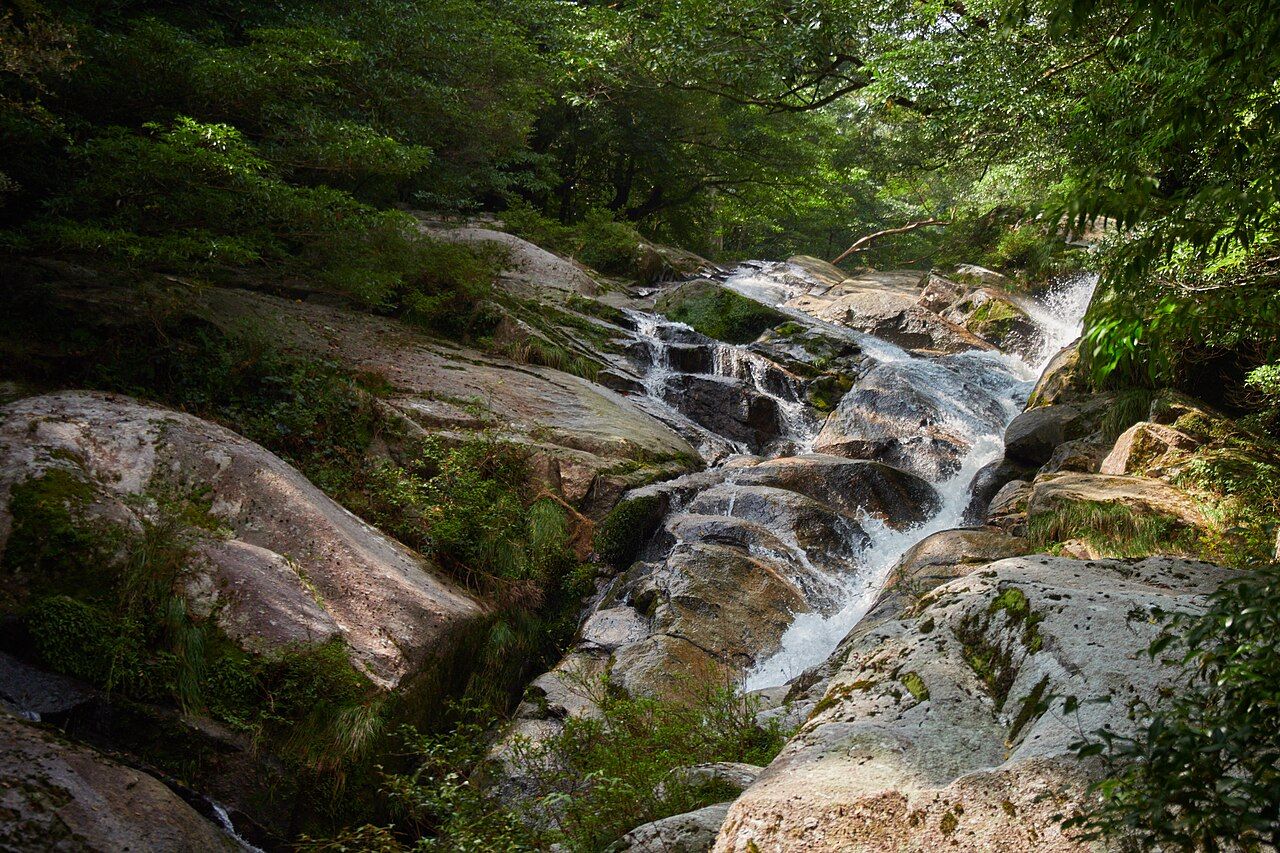
My favourite forest walk is the one that stops trying to prove it was worth taking.
Close by in spirit: St Olav’s Way to Trondheim, one long question at a time