Baden-Baden on foot, from the Oos to the hills
A spa town on the Black Forest’s western edge, where a riverside avenue, a frescoed pump room and hills above town make walking the main event.
- Kind of place
- spa town
- House rule
- textile-free saunas
- Country
- Germany
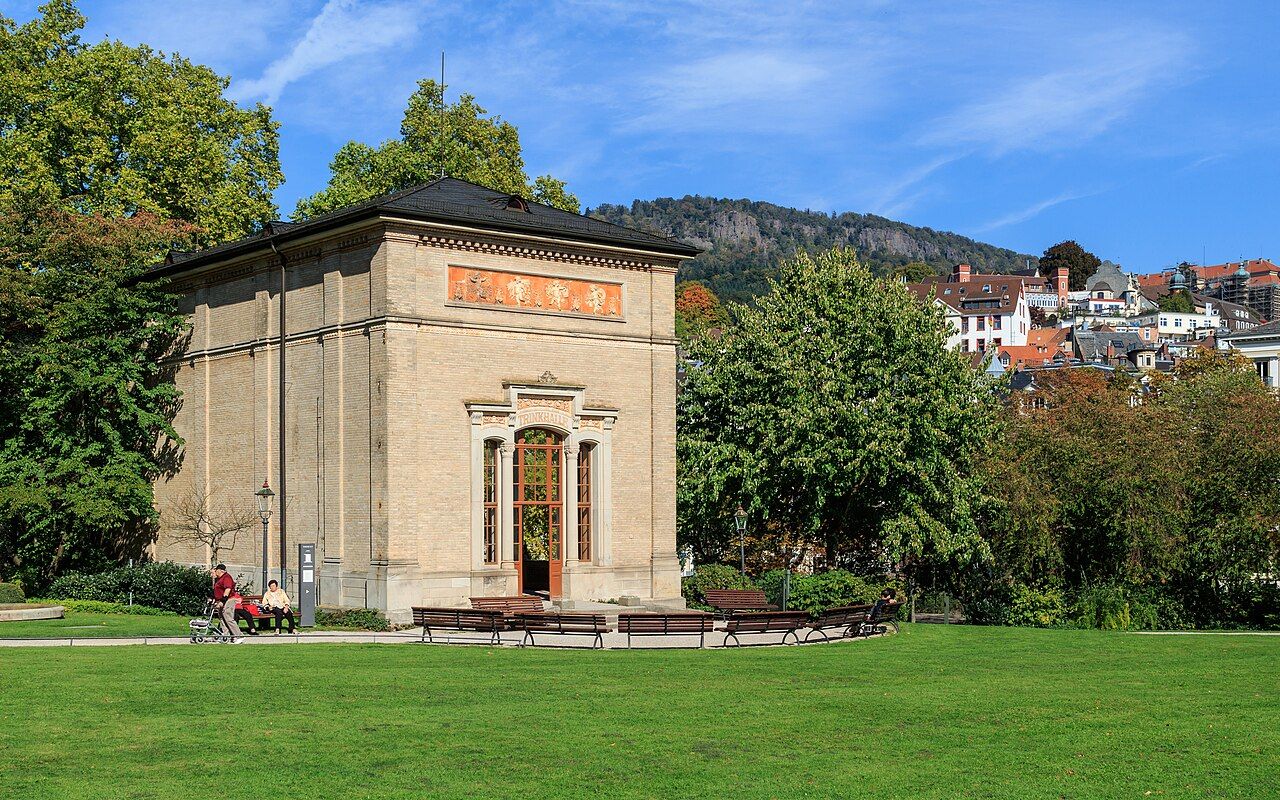
What is Baden-Baden like on foot? It is a spa town on the western edge of the Black Forest, with a river running through its park avenue, hills behind it and springs beneath the old town. The walks make a good way to meet the place without pretending every outing needs a grand purpose.
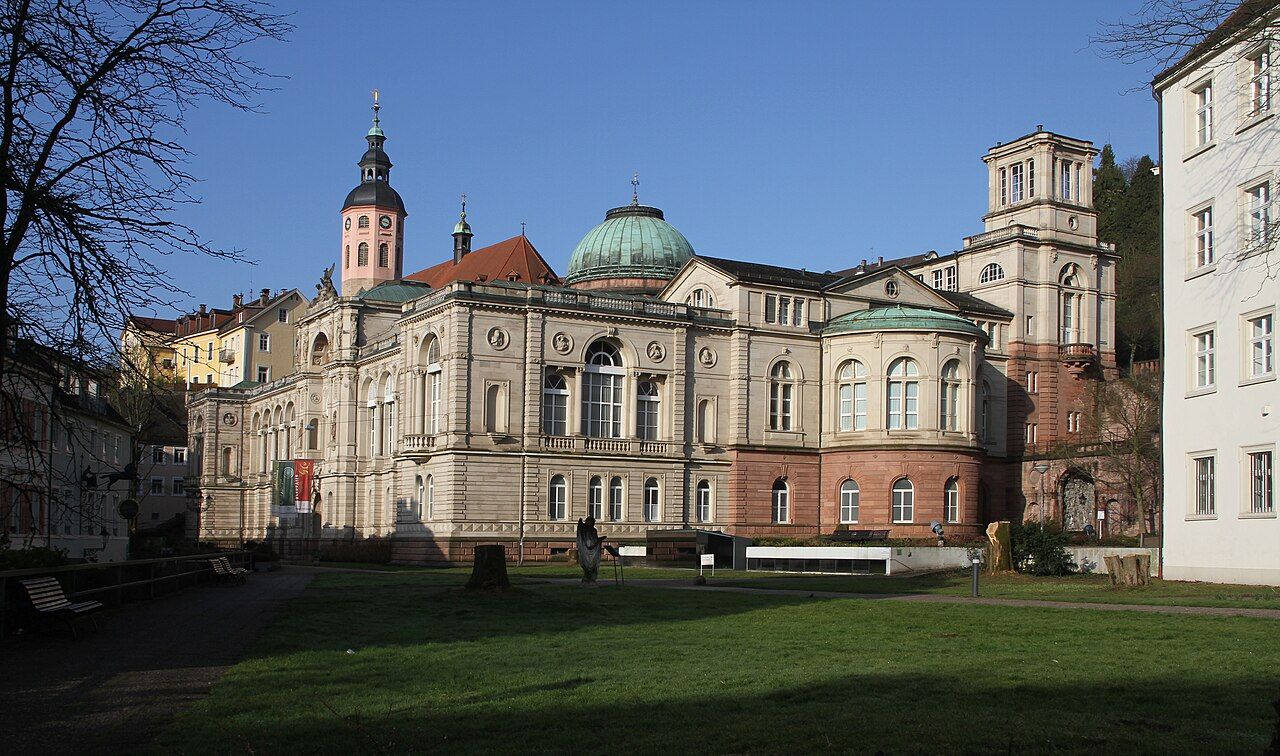
Where does the town begin? With water, more or less. The Romans used Baden-Baden’s hot springs, and the remains of their baths lie under the old town. About a dozen thermal springs rise beneath Florentinerberg hill in the centre. The useful thing about this history is that it is not politely confined to a display case: it sits under the streets, while the town carries on above it.
What is the Trinkhalle? A pump room with a long portico of painted frescoes, built between 1839 and 1842. It is an easy place to pause on a walk, and a reminder that Baden-Baden’s spa-town life has always involved more than getting into water. The portico gives the visit a measured pace: look, walk, stop again. Nobody needs to turn it into a strenuous cultural itinerary.
Where is the simplest walk? Along the Lichtentaler Allee, a park avenue following the little River Oos for about two kilometres through town. The river is a small, steady companion; the path gives the legs something to do while the mind catches up. This is my favourite sort of town walk: clear enough to follow, and with no summit waiting to judge the effort. It is also the obvious answer to the question of how to spend time outdoors here.
And what lies above the streets? The hills behind town, including Merkur, which rises to about 670 metres and is reached by a funicular railway. There is a change of scale between the Oos beside the path and the higher ground above town. For a longer look beyond Baden-Baden, there is the high forest an hour's drive south. The town itself has enough walking to keep the day modest; the hills offer a different view of the setting.
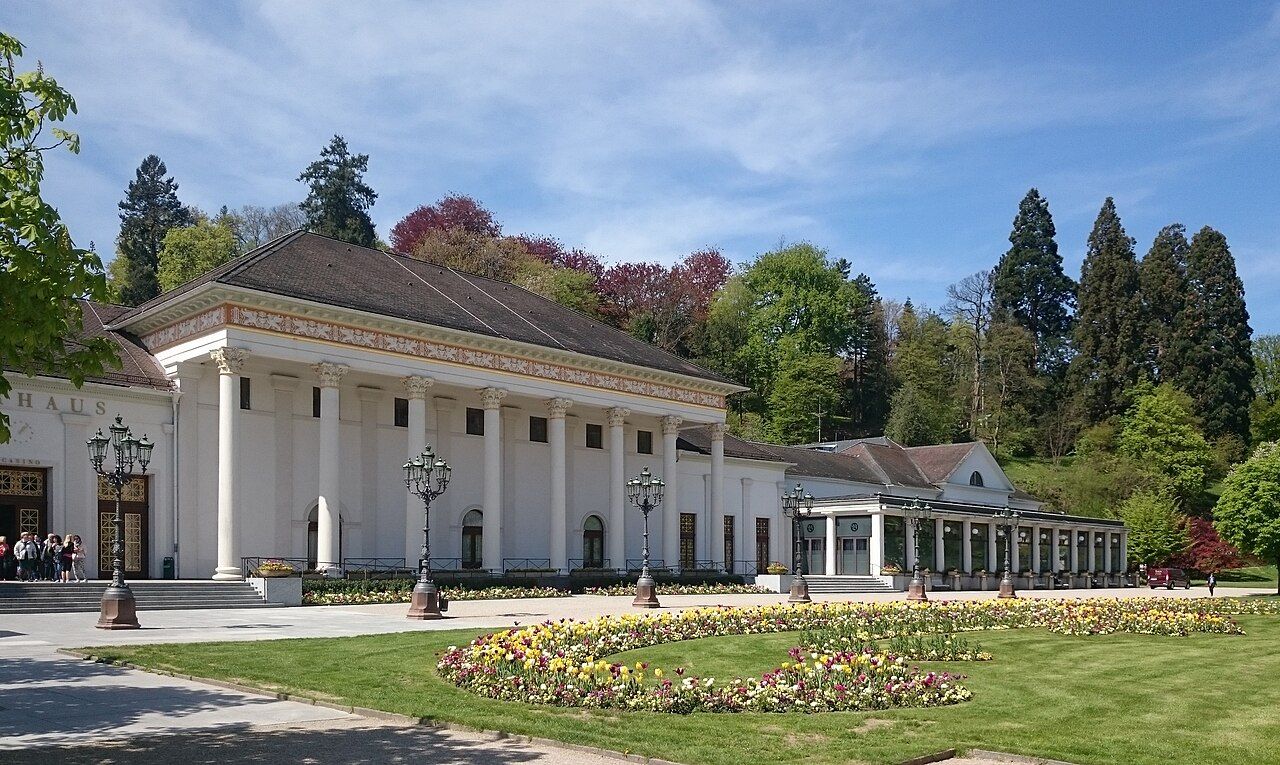
Why did Baden-Baden become a meeting place? In the 19th century it was known as a summer gathering place for European royalty and writers. Fyodor Dostoevsky stayed here in 1867 and drew on his time in the town for his novel The Gambler. The old reputation still helps explain the grand public spaces, though a walk today need not involve royalty, writers or any particular talent for gambling. Baden-Baden is one of the Great Spa Towns of Europe, listed by UNESCO in 2021.
What are the bathing customs? In German spa towns, sauna areas are usually textile-free; swimsuits are worn only in the pools. That is the general arrangement, rather than a local puzzle requiring a detective. For the reasoning behind it, read why nobody wears a swimsuit in a German sauna. If the swimsuit question seems to travel differently from country to country, there is also the swimsuit question country by country.
Where does the town point for more detail? Baden-Baden's own town pages covers its parks, springs and events. A walk along the Oos, a look at the Trinkhalle and a little time among the hills make a sound outline; the springs and bathing customs supply the town’s other rhythm. For another spa-town story, continue with Vichy.
Close by in spirit: Vichy, the springs and the long walk by the Allier
The numbers: about a dozen springs; about two kilometres along the Oos; Merkur rises to about 670 metres.