Pamukkale: barefoot on the white terraces
A day paced from morning to late afternoon: barefoot travertine underfoot, and the ruins of Hierapolis above the terraces.
- Kind of place
- mineral terraces
- House rule
- shoes off on the travertine
- Country
- Turkey
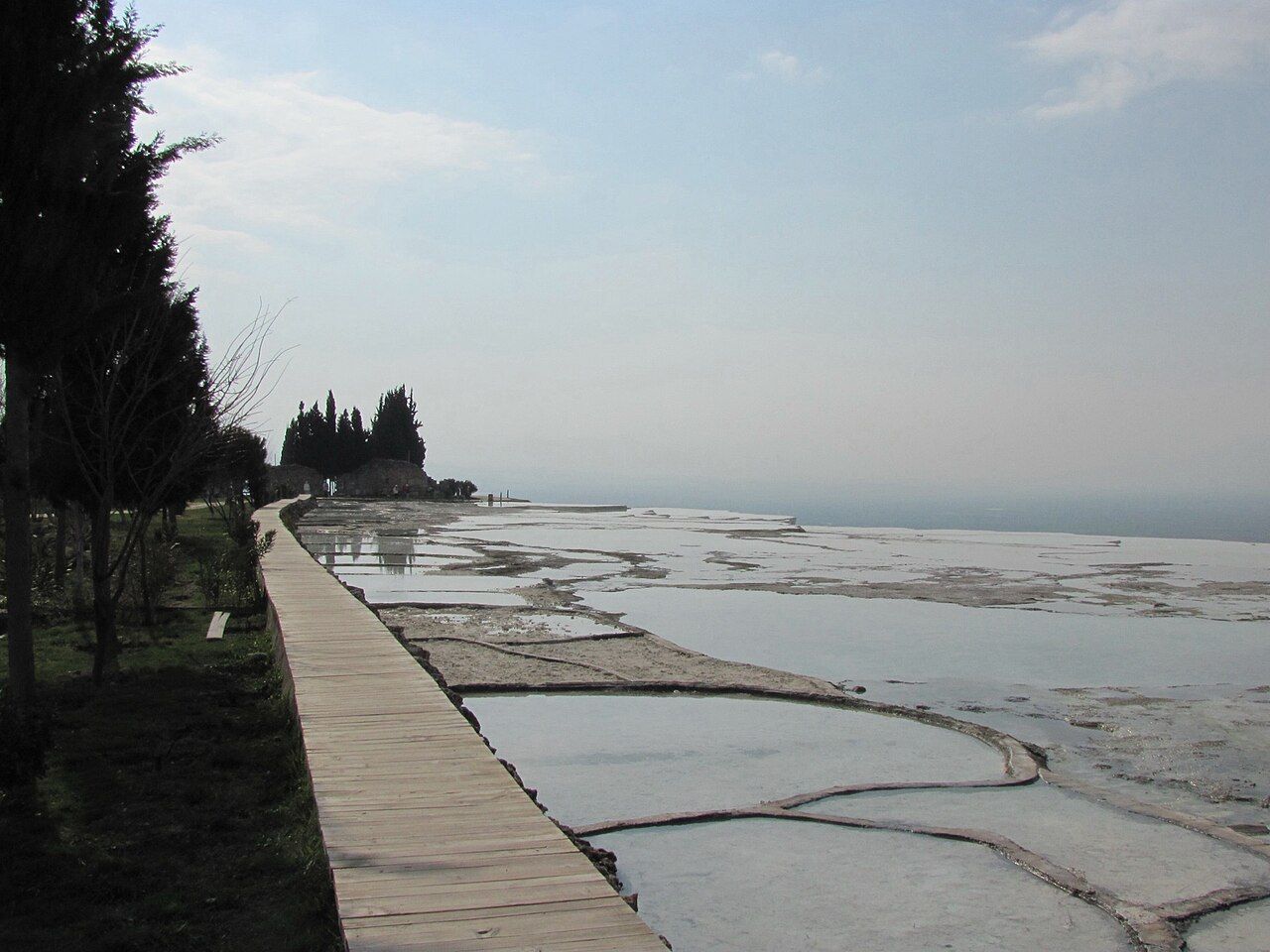
Morning: what is this white place? Pamukkale lies in Denizli Province in southwest Turkey. Its name means cotton castle in Turkish, which is an unusually direct bit of naming. The terraces are made of travertine left by hot water rich in calcium carbonate. The white steps rise beneath the ruins of Hierapolis, so the walk is also a way into the ancient city above.
What happens first? Shoes off. Visitors must walk barefoot on the travertine to protect its surface. It is a simple instruction, and one that makes the ground impossible to ignore. There is no shoe sole between the feet and the pale stone; the walk asks for attention rather than speed. If the mind wanders from walking to floating, it can take a detour to the saltiest water on earth. Different feet, different plans.
Close by in spirit: Budapest's thermal baths, pool by pool
Midday: is the white really that bright? Yes. The travertine reflects strong sunlight, and by midday in summer the terraces get very bright and hot. This is not the moment for pretending the landscape has kindly dimmed itself for a visitor. The route is still the route; the light is simply very much part of it.
What is waiting at the top? Hierapolis, a Greco-Roman spa city founded in the second century BC. Its theatre could seat about 12,000 people. The necropolis, with more than a thousand tombs, stretches along the road into the ancient city. These are not incidental ruins beside the terraces; they are the other half of the place. UNESCO added Hierapolis-Pamukkale to its World Heritage list in 1988.
Late afternoon: what deserves the remaining attention? The contrast itself: bare feet on travertine, then the scale of an ancient city. Take the walk at a human pace. The stone is not going anywhere, and the old city has already had a long time to get used to visitors.
The numbers: inscription, 1988; theatre, about 12,000 seats; necropolis, more than a thousand tombs. For another bathing-town story, try Turkey's other great bathing town.