Beppu’s hells and sand baths
A day in Beppu moves from cobalt-blue and iron-red hot springs to steam rising across Kannawa, then warm sand at a city-run bathhouse.
- Kind of place
- hot spring town
- House rule
- look, do not bathe, at the hells
- Country
- Japan
Beppu
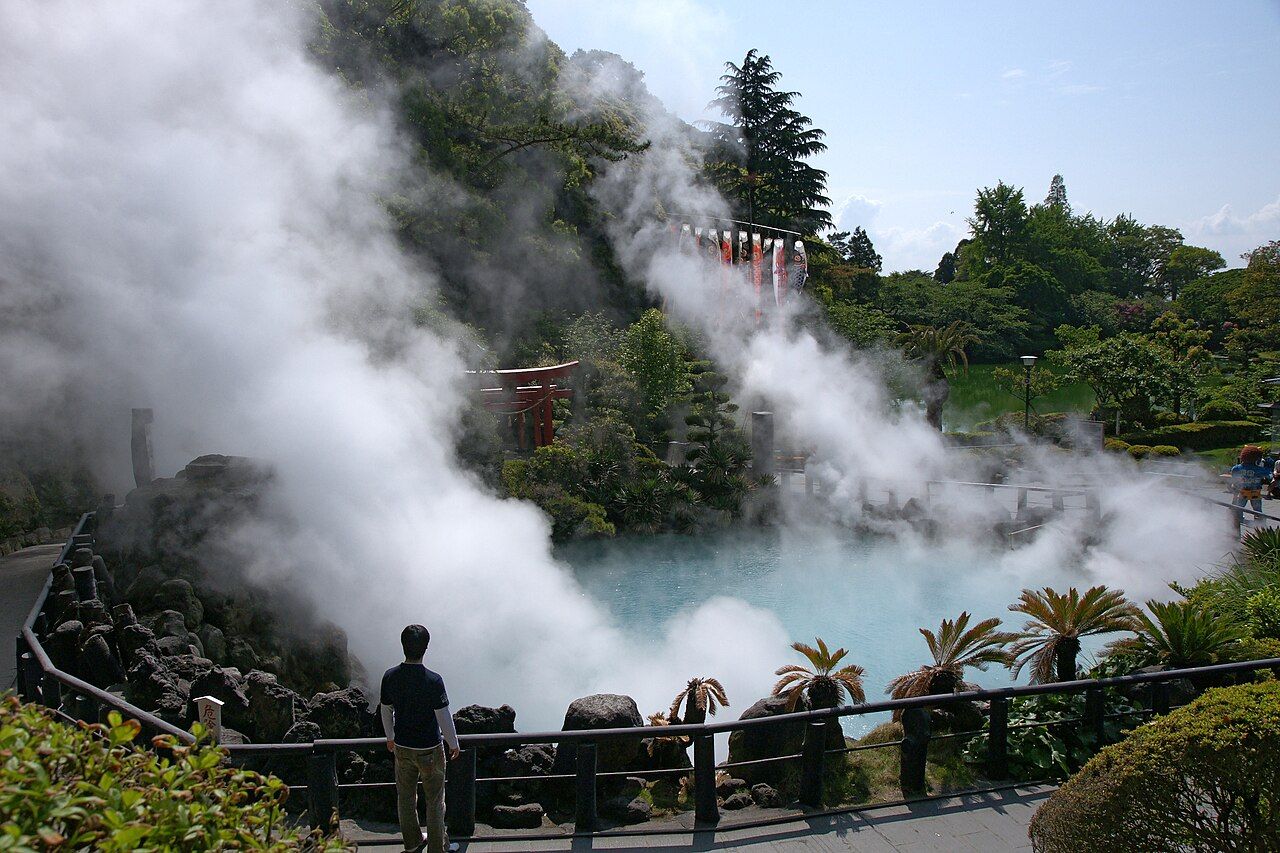
At Beppu, the first question about a bathhouse gets an unexpected answer from the water: some of it is for looking at. The city lies on the east coast of Kyushu in Oita Prefecture and has more hot spring sources than any other city in Japan. More than 2,000 is a lot of places to imagine getting into. The hells, called jigoku, are not those places. They are too hot for bathing, and the point is their colour and steam.
Morning: what is a sensible beginning to a day here? Start with the distinction between a bath and a sight. It sounds obvious, until the word “hot spring” has done its work and the mind has already found a towel. The hells are hot springs, but they are visited for what they look like. Steam makes the answer hard to miss; it rises from water that is not inviting anyone in.
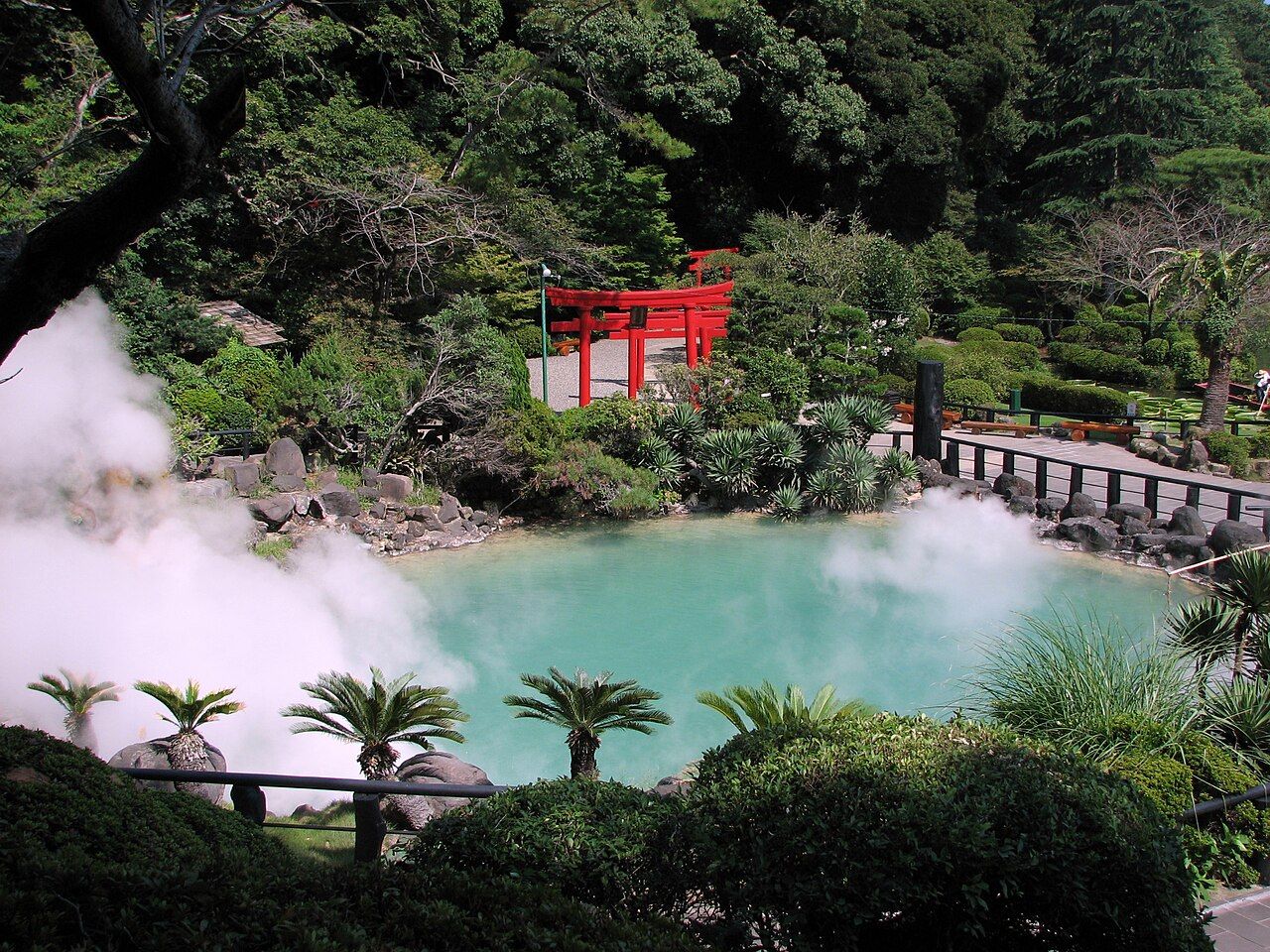
Is there a particular colour to look for? Umi Jigoku, the Sea Hell, is a pond of cobalt-blue water. Chinoike Jigoku, the Blood Pond Hell, is red, coloured by iron oxide and clay. These are not subtle shades, and the names have no interest in pretending otherwise. One is blue; one is red. The steam gives the scene a moving edge, while the ponds themselves hold their colours. A person can admire a hot spring without testing the definition of too hot. This is a useful skill in Beppu.
Why look at water that cannot be bathed in? Because a hot spring town is not obliged to make every spring a bathing experience. The hells offer another kind of visit: a view, a colour, a drift of steam. Several of them were designated a national Place of Scenic Beauty in 2009. The official-sounding title fits the place rather better than the idea of trying to soak in it.
The hells are for looking, not bathing.
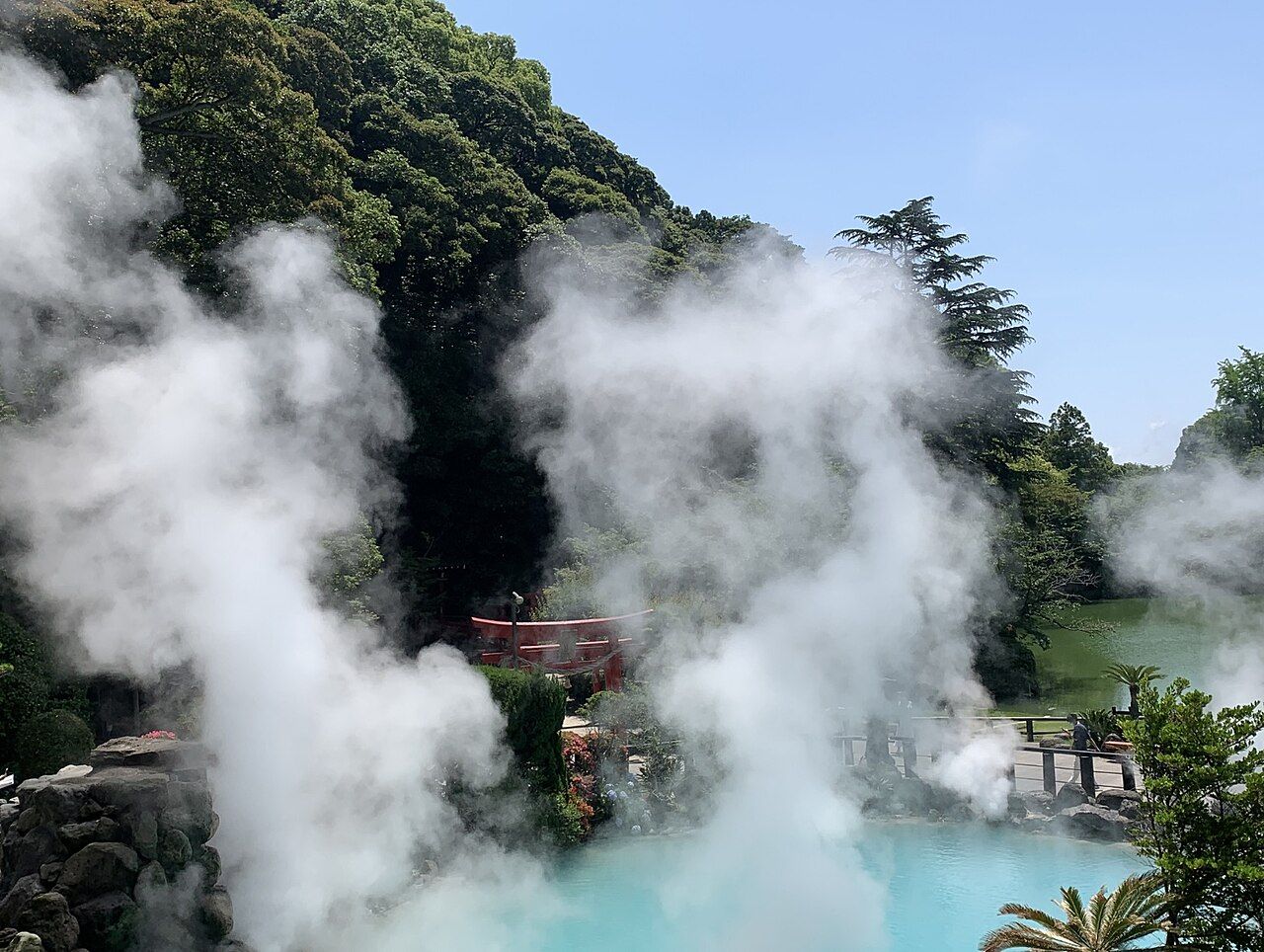
The hells are for looking, not bathing.
Does this much geothermal drama feel familiar? For a comparison beyond Japan, there is a steaming town on the other side of the Pacific. Beppu has its own particular palette, though, and the colour names are already doing quite enough work. A visitor can let the view be the activity. No bath is missing from the day simply because one pond is not an option.
Kannawa
Midday: where does the steam go when the visit to the hells is over? In Kannawa, it appears throughout the district, rising from vents and pipes. Steam is not confined to a single pond or framed view here; it is part of the district’s visible texture. The effect is less “one remarkable plume” than a town where hot spring activity keeps making itself known. The eye keeps catching it, which is either a distraction or the whole point, depending on the hour.
What else is happening with all that heat? Jigoku-mushi is a way of cooking food in steam from the hot springs, found in Kannawa. It makes the steam more than a scenic feature: it is used in cooking, too. The name belongs to the method, not to another bathing opportunity. Beppu’s hot water has different roles, and the useful thing is not to confuse them. Some springs are looked at; steam can cook food; sand can be part of a bath. The day has a surprisingly clear set of instructions, even if the scenery insists on being dramatic.
Is there a larger question behind the colours and cooking? What does a hot spring town look like when the springs are not hidden away as a bathhouse amenity? Kannawa offers one answer through the steam rising from its vents and pipes. The view is not just a pond’s surface. It is also the steam in the district, and the knowledge that the same hot spring source can be part of cooking.
Close by in spirit: Noboribetsu and Hell Valley: a walk to the warm stream
Takegawara Onsen
Late afternoon: where does a visitor go to bathe, after spending time looking at water too hot for bathing? Takegawara Onsen is a public bathhouse run by the city of Beppu, in a building from 1938. Here the day changes register. The hells have made a case for distance: look at the water, do not get in. At Takegawara Onsen, bathing is part of the place’s purpose, and the warm sand offers a different way to spend time with heat.
What happens in a sand bath? At Takegawara Onsen, bathers can be buried in warm sand by an attendant. It is an unusually literal answer to the question of how to have a warm bath: the bath is sand, and a person is covered by it. The detail that stays with the mind is the temperature word, warm. After the hot springs that must be admired from a safe distance, a bath experience based on warm sand has a certain dry logic. The earth, apparently, has more than one way to make its point.
Is this the moment to learn the conventions of Japanese bathing? A visitor looking for a separate introduction can read about the basic manners of the bath. And if the curiosity is about an older bathhouse rather than a sand bath, there is one of Japan's oldest bathhouses. Beppu’s own day has already drawn a useful line between looking and bathing: the hells belong on one side, and Takegawara Onsen on the other.
So what is the shape of a day here? Morning with cobalt-blue and iron-red water, midday among Kannawa’s vents and pipes, late afternoon with warm sand at a city-run bathhouse. It is an itinerary that lets steam do most of the announcing. The colours are vivid; the advice is plain. Leave the hells to the view.
The numbers: more than 2,000 hot spring sources; Takegawara Onsen’s building dates from 1938; several hells received their designation in 2009.