Kinosaki, bathhouse by bathhouse
An evening walk between seven public bathhouses, in yukata and wooden geta, beside the willow-lined Ōtani River.
- Kind of place
- public bathhouses
- House rule
- walk in yukata and geta
- Country
- Japan
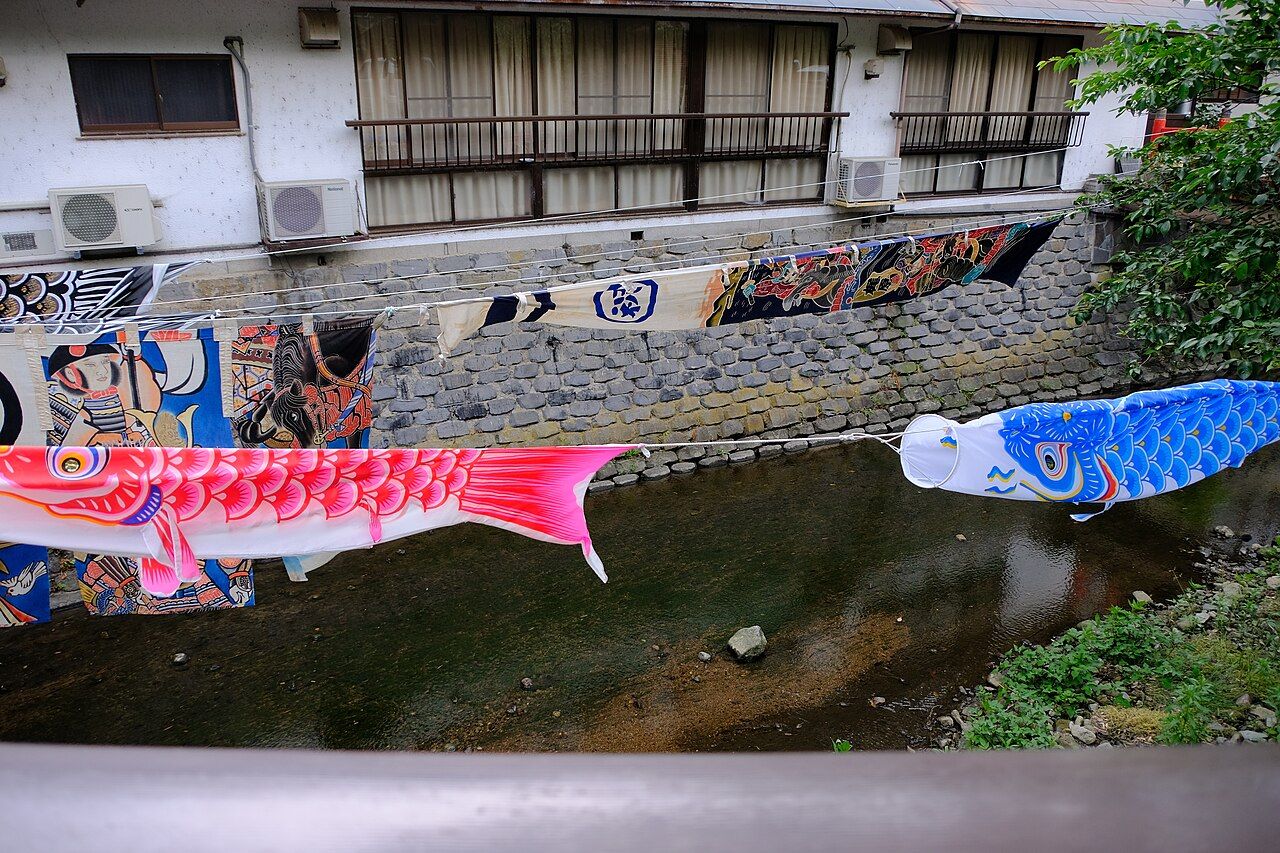
What does an evening in Kinosaki look like? A walk from bathhouse to bathhouse, with the river keeping pace and wooden sandals making sure nobody forgets they are there.
Where is Kinosaki? Kinosaki Onsen lies in the city of Toyooka, in Hyōgo Prefecture, near the Sea of Japan. Its seven public bathhouses are spread along the main streets, so the evening’s shape is simple: walk, bathe, walk again.
Why walk between baths? The bathhouses are part of the town’s streetscape, rather than a single stop to be ticked off. Visitors move from one to another on foot. There is no complicated itinerary here, only the small decision of which bathhouse comes next.
What does the walk sound like? Yukata and wooden geta sandals are the usual dress for the journey between baths. The geta clatter on the streets, part of Kinosaki’s evening sound. It is a modest soundtrack, with very little chance of mistaking it for silence.
Where does the river fit in? The Ōtani River runs through Kinosaki between willow trees and small stone bridges. This is the view to keep alongside the bathhouse-to-bathhouse rhythm: water, willows, bridges, then the next stretch of street.
Is there a literary reason to linger? Shiga Naoya stayed in Kinosaki in 1913 and wrote his short story At Kinosaki after that stay. For another bathhouse story, read about the wooden bathhouse in Matsuyama.
What helps with the onsen routine? The streets are the connecting thread; the bathhouses are the stops. For a clearer sense of the customs, follow the step-by-step of an onsen visit. Or, for another city’s version, there are Tokyo's corner bathhouses.
What lies above the town? A ropeway climbs from Kinosaki to the top of Mount Daishi, with views over the town and the river mouth. Kinosaki was rebuilt after the Kita-Tajima earthquake of 1925; the town’s present evening walk passes through that history without turning it into a lecture.
For another story, continue here:
Close by in spirit: Noboribetsu and Hell Valley: a walk to the warm stream