Kyoto’s Zen gardens, arranged for stillness
A short guide to Kyoto’s dry gardens: Ryōan-ji’s fifteen stones, the views from its veranda, and other places where sitting still is part of looking.
- Kind of place
- temple garden
- House rule
- sit, do not step on the gravel
- Country
- Japan
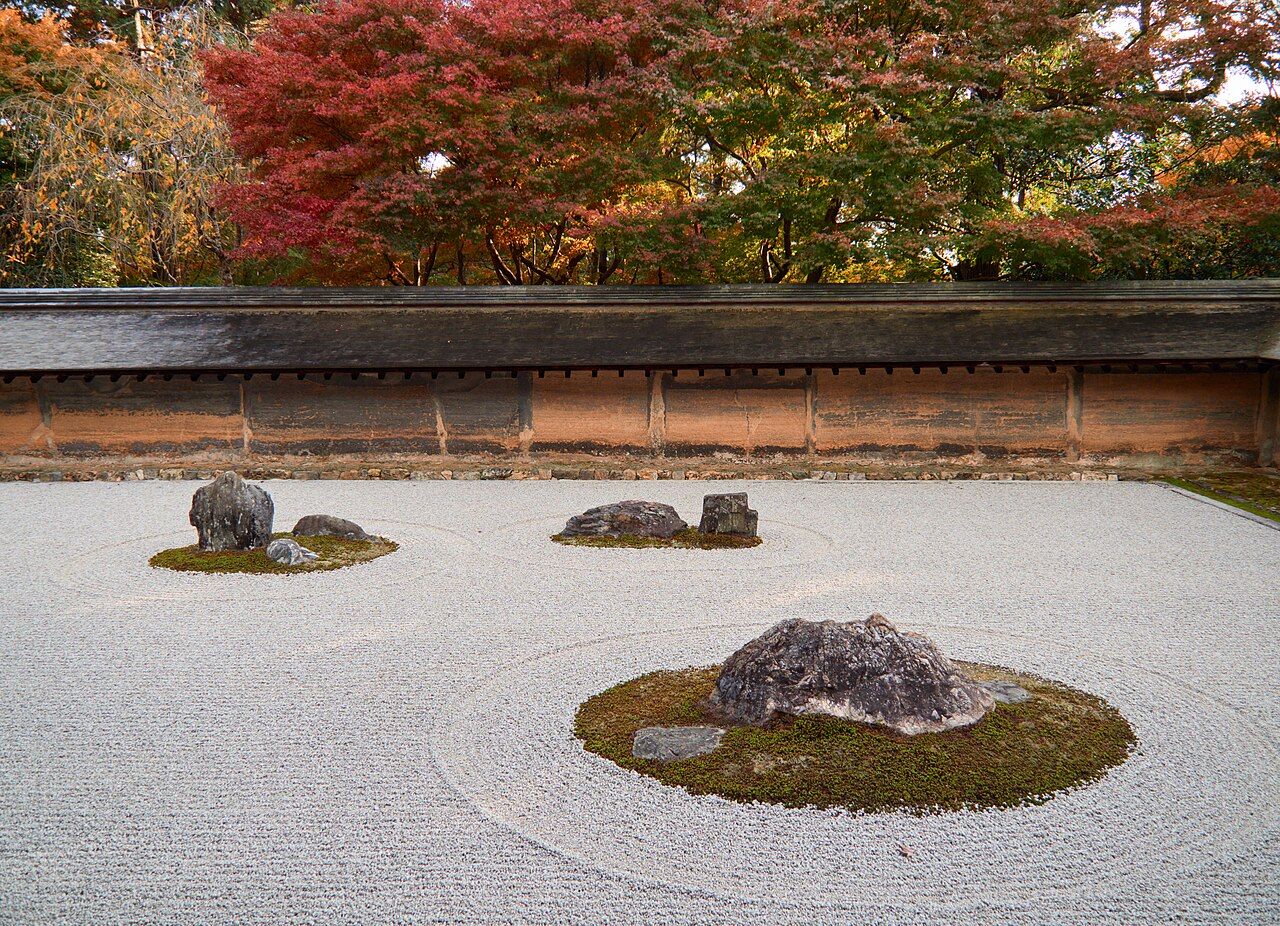
At Ryōan-ji, a visitor sits down to look at fifteen stones. The first count seems straightforward. Then comes the small complication: from any one point on the veranda, at least one stone is hidden. The garden is not being difficult, exactly. It is simply not offering a view that can be collected all at once.
Kyoto
What is a dry garden? A karesansui, or dry landscape garden, uses rocks and raked gravel instead of water. That is the basic arrangement, and also most of the explanation. The gravel is white at Ryōan-ji; the stones sit within it. Nothing here asks for a stroll through the composition. The point is to look, preferably while sitting still, and let the eye do the small work of moving around.
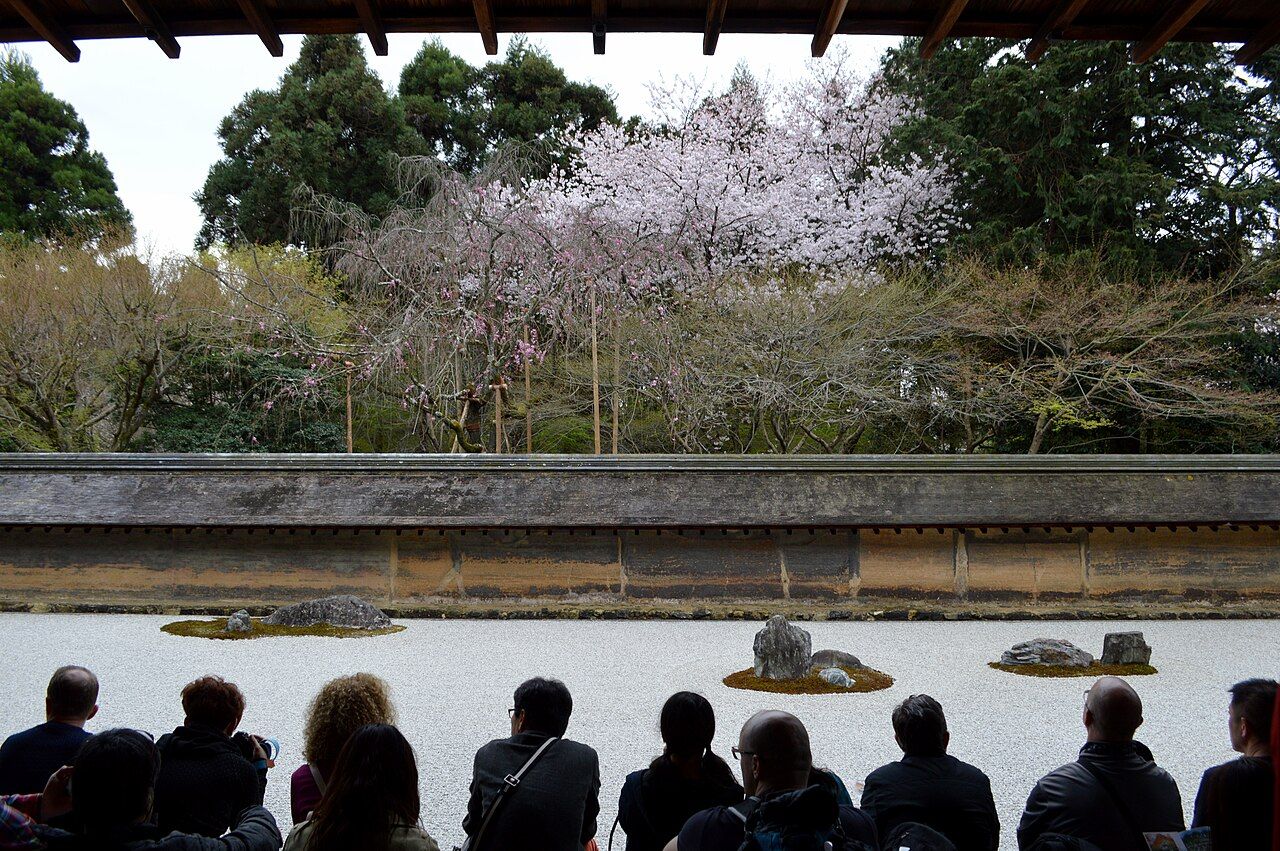
Why does Ryōan-ji reward sitting? Its rock garden has fifteen stones set in a bed of raked white gravel. From any one point on the veranda, at least one of those stones is out of view. Moving about to solve the puzzle would miss the point rather efficiently. Sit, look, and accept that the view is partial. A garden can keep one detail to itself without making a production of it.
What is the setting? Ryōan-ji is a temple of the Rinzai school of Zen Buddhism in northwest Kyoto. It is also part of the World Heritage site of the Historic Monuments of Ancient Kyoto, inscribed in 1994. Those facts place the garden within a larger temple setting, but the stones remain the thing the visitor is asked to meet with the eyes. The veranda gives that meeting its still, seated form.
Is there anything to do? Sitting is not a consolation prize for people who failed to find an activity. Monks rake the gravel of Zen gardens into lines and circles as part of temple work; the patterns are part of what is seen. At Ryōan-ji, the clean contrast between gravel and rock gives the gaze somewhere to rest, then somewhere else to go. For an activity list, this is admirably brief.
What about Tenryū-ji? Its garden was designed by the Zen monk Musō Soseki in the 14th century. That is the detail to carry into a visit: the garden belongs to a particular act of design, not merely to the general category of gravel and rocks. I favour gardens that ask for attention without requiring a visitor to perform enthusiasm. Tenryū-ji gives this list another reason to sit and look.
Can Saihō-ji be approached in the same way? Its moss garden has a different condition attached: visits must be arranged in advance, and visitors take part in copying a sutra. The garden and the visit are not quite the same sort of pause as Ryōan-ji’s veranda. Still, the idea of looking carefully carries across. The site offers no reason to hurry through the act of seeing, which is already more than many itineraries manage.
When should the other gardens be seen? Early, before the crowds, is the appealing answer for a place whose main instruction is to sit and look. A crowd and a quiet garden can occupy the same space, but they do not make identical demands on the eye. If Kyoto’s temples leave the visitor wanting another kind of stillness, there is a night with the monks. For a greener change of scene, try the moss forests of a southern island.
Ryōan-ji's own site describes the stone garden and the temple grounds. Its fifteen stones are enough to make a simple instruction feel quietly unresolved: sit, look, and do not expect to see everything from one place.
Close by in spirit: Meteora, and the climb between questions
My favourite Kyoto garden is the one that lets a partial view count as the whole visit.
The numbers: fifteen stones; 14th-century design; 1994 inscription.