A slower circuit through three spa towns
Follow the day through a river town, a covered promenade hall and a small Bohemian town of yellow-and-white buildings. The pleasure is in keeping the map modest.
- Kind of place
- spa town
- House rule
- the covered halls are for walking
- Country
- Germany and Czechia
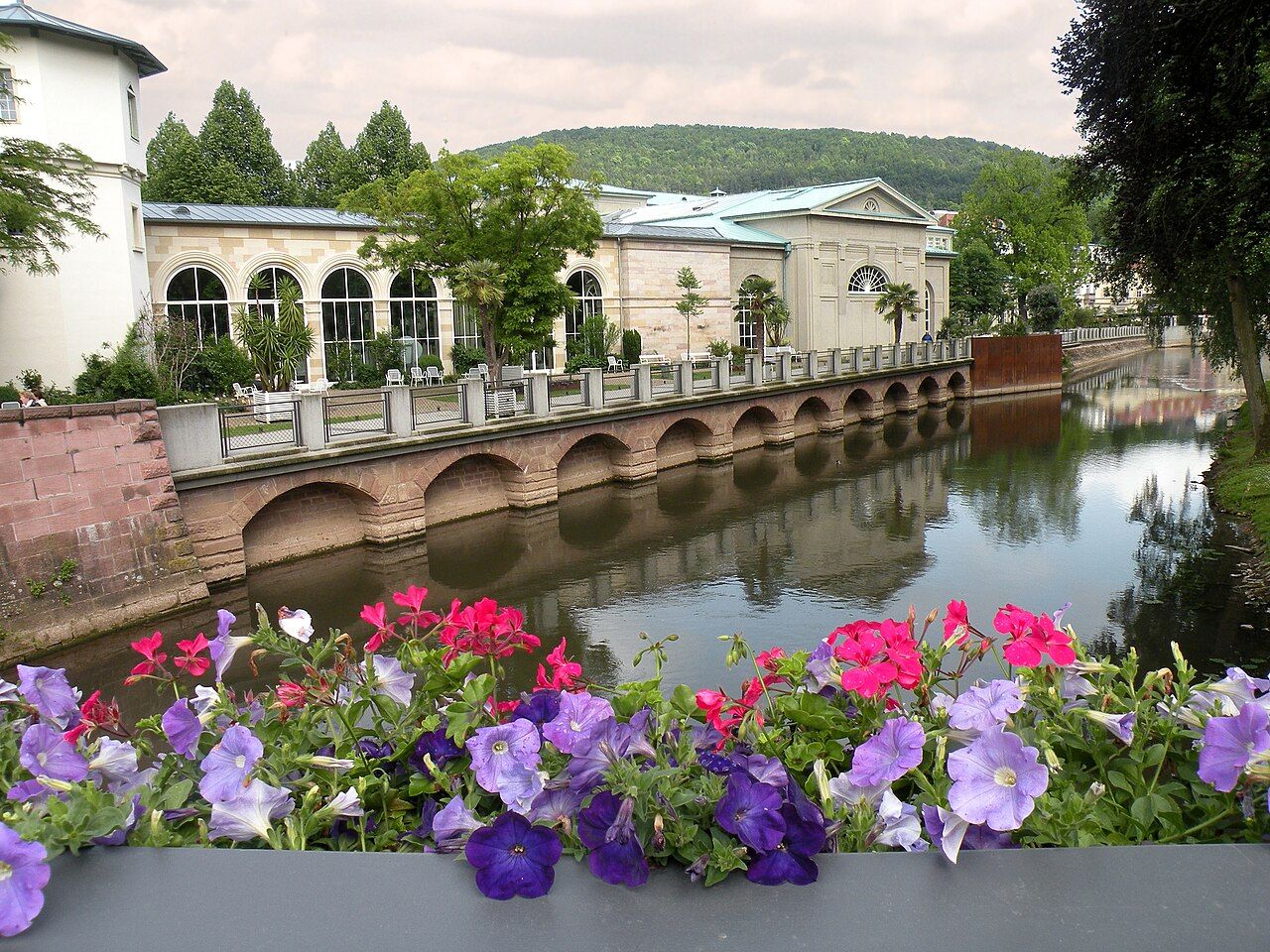
A small spa-town itinerary often begins with an ambitious map. Then comes the useful discovery: the towns are quieter, and easy to walk end to end. Bad Ems, Bad Kissingen and Františkovy Lázně make a good case for leaving some of that map folded. What does a day look like when the distances stay modest? Morning, midday and late afternoon are quite enough of a plan.
Bad Ems
Morning: where does the walk begin? By the River Lahn, in Bad Ems, in the German state of Rhineland-Palatinate. The river gives the town a clear point of orientation; the rest can be approached without treating every turn as a logistical achievement. This is the quieter end of the Great Spa Towns of Europe, all three towns listed in 2021, and the scale suits a walk with no heroic ambitions.
Midday: what is the historical detour? The Ems Dispatch, a telegram sent from Bad Ems in July 1870, helped start the Franco-Prussian War. A town can be pleasant to walk through and still have a paragraph of history that makes lunch feel unusually serious. The telegram is a reminder that even a quiet place may have had a consequential moment; it need not be the whole itinerary.
Late afternoon: what’s the mood? Keep walking, and let the river do the work of making the route feel legible. The point is not to collect every detail. It is to notice how little effort it takes to cross a town whose scale is part of its appeal.
Bad Kissingen
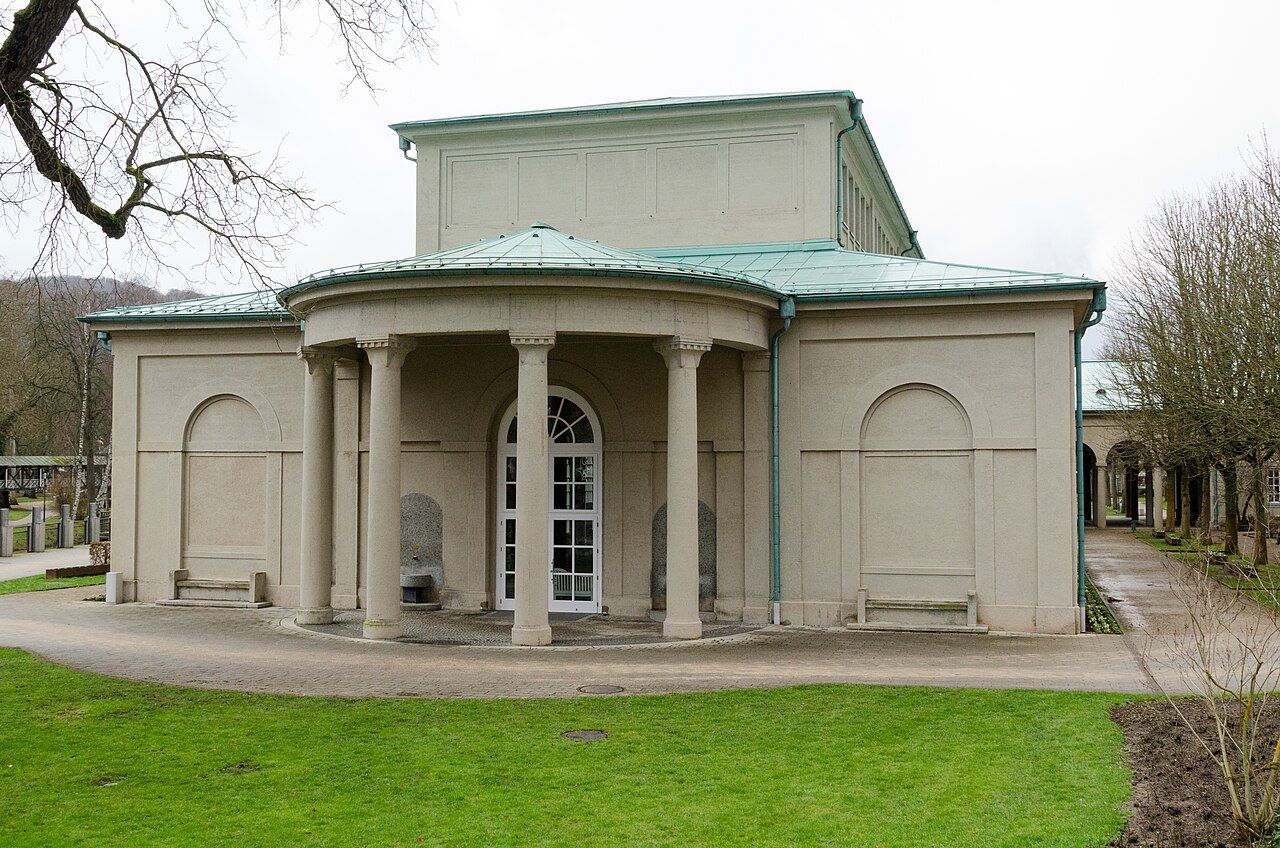
Morning: what if the weather is uncooperative? Bad Kissingen sits on the Franconian Saale River in Bavaria, and its answer is the Wandelhalle: a covered promenade hall for walking in bad weather, built at the start of the 20th century. The name may sound formal. The purpose is pleasingly plain: keep walking under a roof. There is something quietly generous about a place that gives a rainy-day stroll its own architecture.
Midday: is this a town for standing still? The Regentenbau is a concert hall built between 1911 and 1913. Otto von Bismarck visited Bad Kissingen many times, and a museum there covers his stays. That is a fair amount of history for a town whose great practical idea is that walking can continue indoors. The Wandelhalle is a favourite for its simple promise; no negotiation with the weather is required.
Late afternoon: what should the pace be? Unhurried. The covered hall is for walking, not for turning a short break into a test of stamina. Wet shoes are not automatically a character-building activity.
Františkovy Lázně
Morning: where are we now? In the far west of Czechia, near the town of Cheb. Františkovy Lázně was laid out across the closing years of the 18th century and the opening years of the 19th, with buildings painted yellow and white. The colours make a gentle itinerary feel even less inclined to rush. It is a tiny town; walking end to end is a more convincing plan than trying to make the day look busy.
Midday: how does it sit among the other Bohemian spa towns? For a point of comparison, there is the busiest of the Bohemian spa towns. Františkovy Lázně offers a smaller-scale counterpoint, with its yellow-and-white buildings and easy distances. The broader list also includes the French town on the same list and the Belgian town that lent its name. The names travel farther than the feet need to.
Late afternoon: is there a final task? No elaborate one. Walk the small town, look at the colours, and let the day remain small.
Close by in spirit: Mariánské Lázně, a spa town in a park
The numbers: all three are part of the Great Spa Towns of Europe, listed in 2021.
The quieter scale is the best argument for all three.